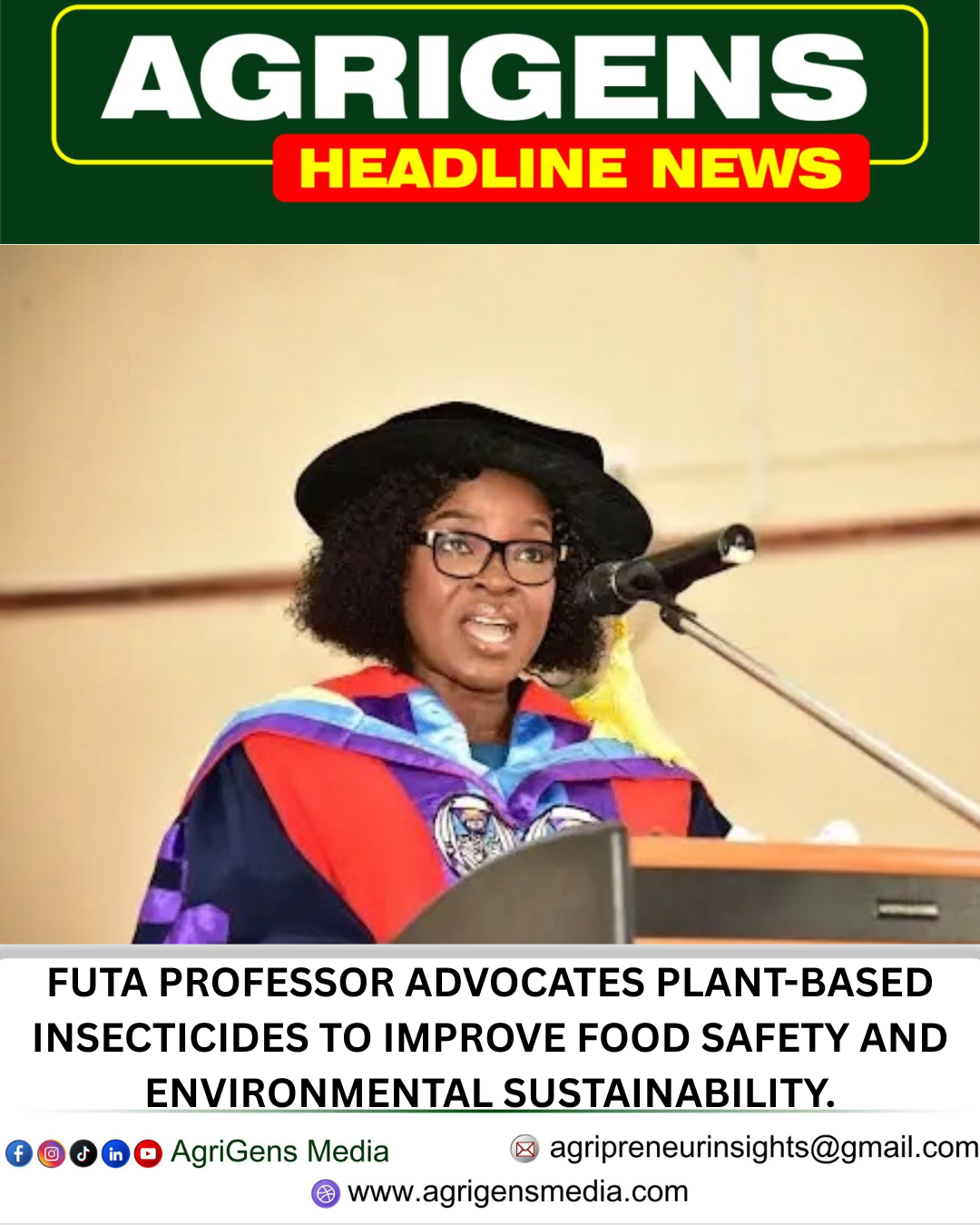
A Professor of Stored Products Entomology at the Federal University of Technology Akure Mercy Olayinka Oni has cautioned against the continued dependence on synthetic insecticides for preserving stored agricultural produce warning that the practice poses significant risks to food safety, environmental sustainability and public health.
Professor Oni raised the concern while delivering the university’s 199th Inaugural Lecture titled “Eco-Friendly Innovations: Tapping into Plant-Derived Insecticides for Stored Products Pest Control.”
According to the entomologist the widespread and often indiscriminate use of synthetic insecticides in controlling storage pests has created a cycle of chemical resistance, food contamination and ecological disruption posing challenges to sustainable food security efforts.
She explained that although synthetic insecticides have historically played an important role in protecting stored grains, cereals, beans and other agricultural commodities from pest infestation their prolonged and excessive use has reduced their effectiveness as pest populations continue to develop resistance to the chemicals.
Professor Oni noted that increasing resistance often compels farmers and storage operators to apply larger quantities of pesticides leading to higher levels of chemical residues in food products and increasing potential health risks for consumers.
She further highlighted the environmental consequences associated with synthetic insecticide use including contamination of soil and water resources, destruction of beneficial organisms and disruption of natural ecological systems.
According to her prolonged exposure to pesticide residues may contribute to a range of health challenges including respiratory disorders, hormonal imbalances, neurological complications and certain cancer-related risks.
To address these concerns, the professor advocated greater adoption of plant-derived insecticides describing them as safer, biodegradable, affordable and environmentally sustainable alternatives for pest management.
She stated that several indigenous plant species possess natural insecticidal properties capable of effectively protecting stored agricultural produce while preserving food quality and reducing risks to human health.
Among the botanical products identified as effective pest-control agents were Neem, garlic, chilli pepper, eucalyptus and pyrethrum all of which have demonstrated significant potential in controlling storage pests.
Professor Oni explained that wider utilisation of botanical insecticides could help reduce post-harvest losses, improve food security and support sustainable agricultural production particularly in developing countries where access to costly pest-control technologies remains limited.
She also called for increased investment in scientific research and stronger integration of indigenous knowledge into modern pest-management strategies to accelerate the development and adoption of environmentally friendly storage solutions.
Speaking at the event, the Vice-Chancellor of FUTA Adenike Oladiji, described the lecture as both timely and relevant to contemporary agricultural and environmental challenges.
Represented by the Deputy Vice-Chancellor (Academic) Taiwo Amos, the Vice-Chancellor said the presentation reflects the institution’s commitment to promoting research-driven innovations capable of enhancing food safety, sustainable agriculture and environmental protection.
She added that the university’s inaugural lecture series continues to serve as an important platform for scholarly discourse and the exchange of ideas on critical national and global development issues.
Stakeholders at the lecture noted that the adoption of eco-friendly pest management technologies could play a significant role in reducing post-harvest losses, safeguarding consumer health, protecting ecosystems and strengthening Nigeria’s agricultural value chains in the long term.