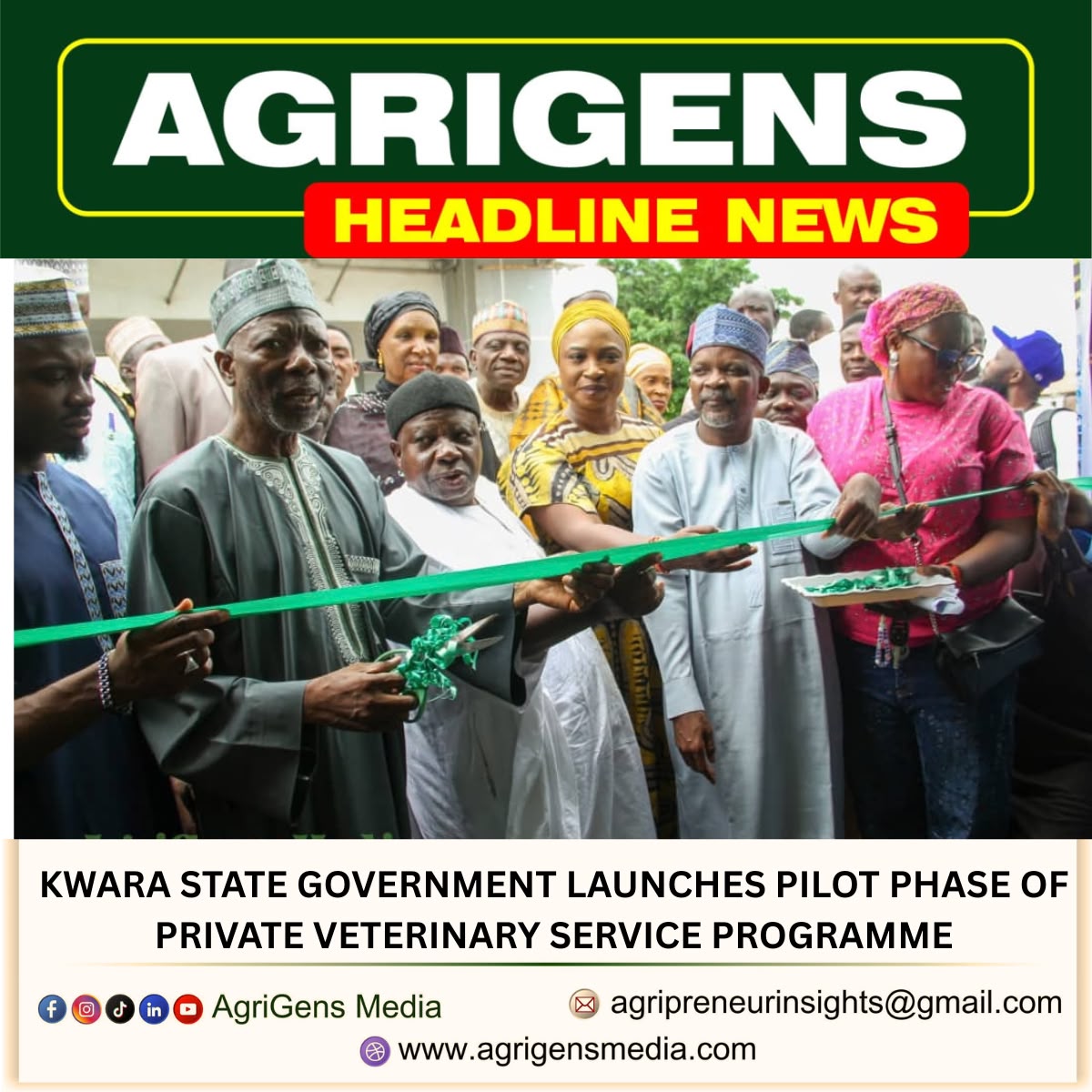
The Kwara State Government has launched the pilot phase of the Private Veterinary Service Programme aimed at improving access to quality and timely veterinary services for livestock farmers across the state.
The programme was launched on Thursday, September 24th 2026, at the Kwara State Banquet Hall.
Speaking at the event, the Commissioner for Livestock Development in Kwara, Mrs Oloruntoyosi Thomas, commended the Livestock Productivity and Resilience Support Project, (L-PRES)for its progress in strengthening livestock production and resilience in the state.
Thomas said the state government had provided demonstration farms for pastoralists and introduced feed and fodder initiatives targeting thousands of cattle over a two-year period.
She added that livestock farmers had also benefited from equipment, including crushers and stretcher machines, while about 200 farmers had been trained across the livestock value chain.
According to her, the interventions were not merely statistics but were already contributing to improved livelihoods.
On animal health, the commissioner stressed the importance of strengthening veterinary services, noting that the state government had renovated several slaughterhouses, promoted hygiene practices and provided cold rooms in abattoirs to preserve leftover meat.
She said butchers and meat handlers had also been trained on hygiene practices to reduce the spread of diseases and promote healthier animals.
“Animal health is extremely important. Government cannot do everything alone; we need the private sector to make sure our livestock farmers have access to good healthcare for their animals and timely professional veterinary doctors, especially in underserved communities.” She said.
Also speaking, the National Coordinator of (L-PRES),Dr Sanusi Abubakar, said the project was determined to transform the livestock sector by developing infrastructure and strengthening collaboration between public institutions and private veterinary practitioners.
He commended the Kwara State Government for its efforts in sensitising stakeholders, noting that participants at the launch came from all local government areas of the state.
Representing the Chief Veterinary Officer of the Veterinary Council of Nigeria, Anzaku Samuel, Dr Abdulakeem Durosinlorun said the programme would strengthen animal disease reporting and improve the availability of data needed for effective planning.
He explained that under-reporting of animal diseases was partly caused by inadequate manpower in many states, adding that additional veterinary personnel had now been engaged to improve disease reporting across the federation.
The President of the Veterinary Council of Nigeria, Prof. Matthew Adamu, disclosed that Nigeria has about 11,000 registered veterinarians, with 85 per cent practising in the private sector.
He said the council, as the regulatory body, was committed to ensuring that veterinary practice in Nigeria meets international best practices.
“As a regulator, the Veterinary Council of Nigeria has the responsibility to ensure that veterinary practice in Nigeria can stand alongside international best practices.” he said.
The Kwara State L-PRES Project Coordinator, Mr Olusoji Ayawoye, described the pilot phase as a significant responsibility for the state, promising that the programme would be implemented effectively and serve as an example to other states.
He expressed optimism that the impact of the programme would become visible within a few months.
The Private Veterinary Service Programme is expected to expand access to veterinary care, strengthen disease surveillance, improve livestock productivity and increase the income of livestock farmers across Kwara State.