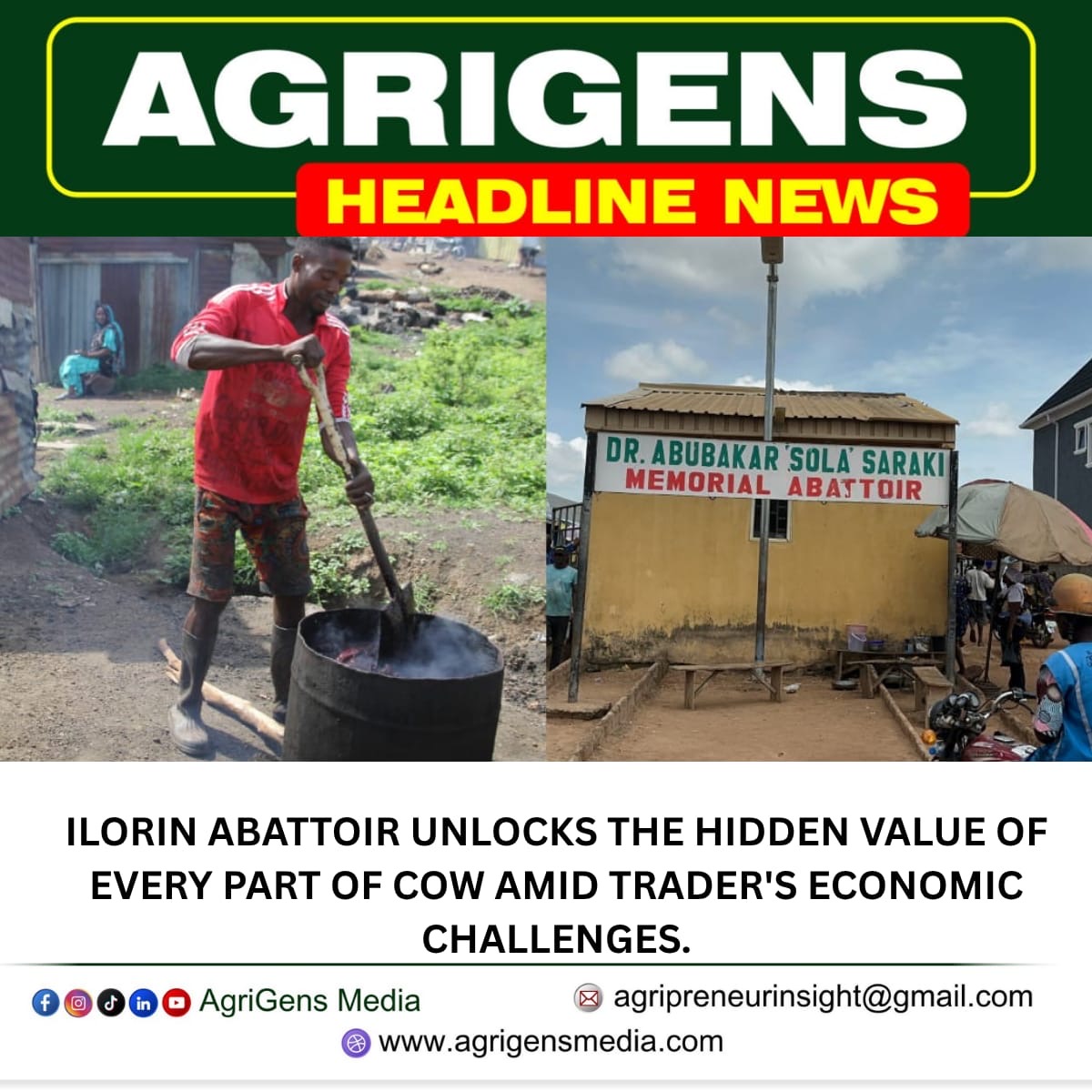
Dr Abubakar Sola Saraki Memorial Abattoir in Akerebiata, Ilorin, demonstrate that the livestock value chain extends far beyond meat processing with stakeholders converting animal waste products into valuable raw materials for livestock feed, fashion accessories, plastics and other industrial uses.
Speaking during an interview, the leader of the blood meal section, Mr Akanbi Omotosho, explained that cow blood is processed into blood meal used primarily as feed for pigs and fish.
According to him, the process begins with collecting fresh blood in buckets before adding salt to eliminate harmful microorganisms that could affect livestock. The mixture is then thoroughly boiled, after which it is spread under the sun to dry before being packaged for use as animal feed.
“The salt helps to destroy microorganisms that may be harmful to animals consuming the feed. After boiling, we dry it under the sun before it is ready for use,” he said.
Also speaking, the leader of the horn segment, Mr Abdulkarim Alapata, highlighted the economic importance of cattle horns, noting that they serve as raw materials for plastic manufacturing and the fashion industry.
He explained that modern designers increasingly incorporate horns into decorative items and accessories, adding that they are also processed into buttons and other ornamental products.
Mr Abdulkarim further described how dry cattle skulls are processed for commercial purposes. He said the skulls are gathered in one location, a small quantity of used tyres is added and they are set ablaze to break them down, making the bones easier to collect.
According to him, the processed bones are sold by weight and are used in the production of animal feed as well as household items such as plates.
Meanwhile, meat traders at the abattoir expressed concern over declining patronage and rising operating costs.
Alhaji Akanbi Isiaka Oluwadare, alongside Alaja Idowu Olopa, lamented that insecurity across parts of the country has significantly affected the meat business.
They recalled that traders previously travelled freely to neighbouring cities to sell meat, while buyers also visited Ilorin regularly. However, they said the prevailing security challenges have disrupted trade, resulting in fewer customers and reduced sales.
The traders also decried the sharp increase in the cost of purchasing cattle, noting that the high prices have further squeezed profit margins and made the business increasingly difficult to sustain.
They appealed for improved security and policies that would ease the cost of livestock production and marketing, stressing that such measures would help revive trade and strengthen the livestock value chain.