

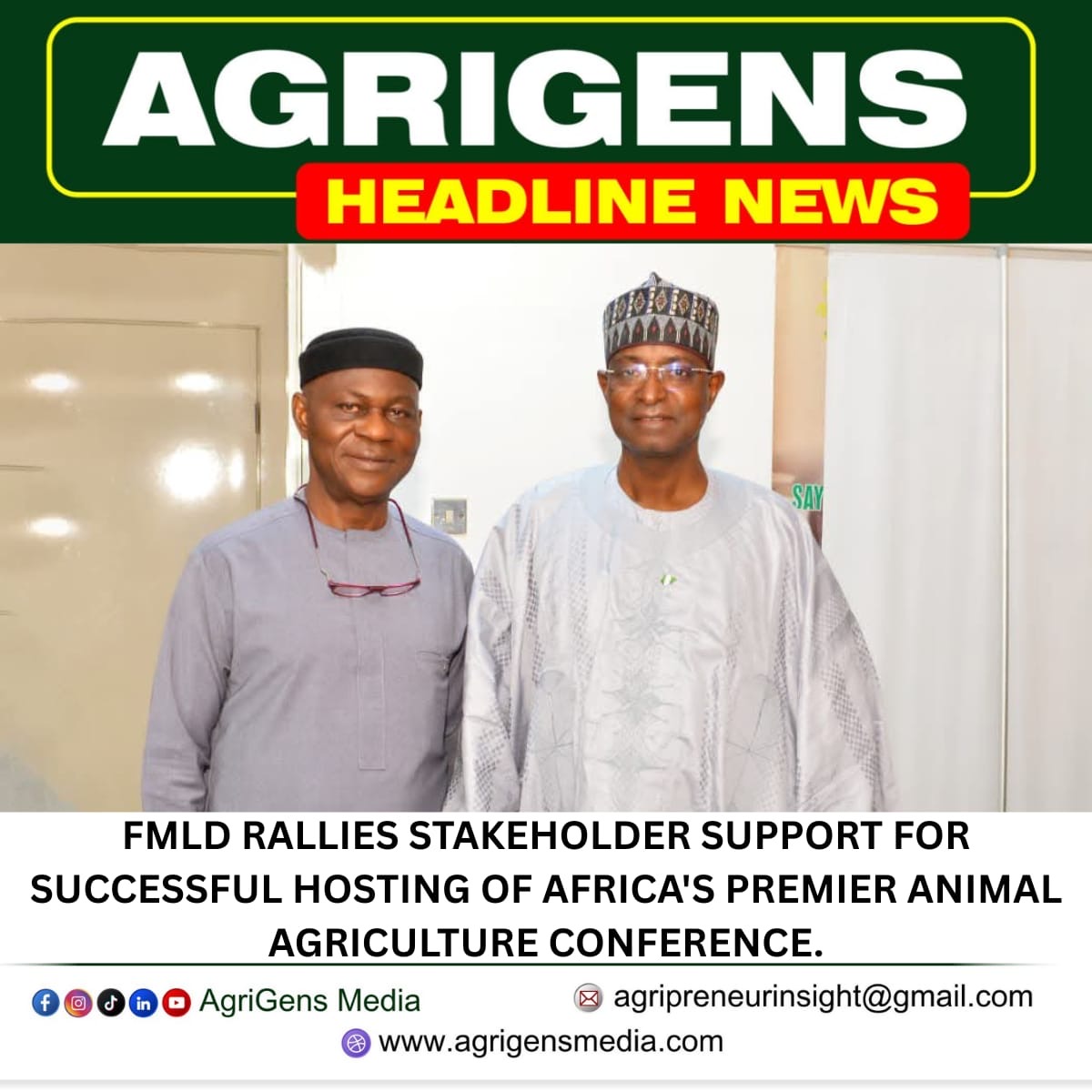
The Federal Ministry of Livestock Development (FMLD) has called for stronger stakeholder collaboration and increased support to ensure the successful hosting of the 9th All African Conference on Animal Agriculture (AACAA), scheduled to hold in Nigeria from August 9 to 13, 2026.
The Honourable Minister of Livestock Development, Alhaji Idi Mukhtar Maiha, made the call during a review meeting with members of the conference Organising Committee held in Abuja.
The meeting was convened to assess the level of preparedness for the continental event and review progress made towards delivering a successful conference.
Commending the Organising Committee for the milestones already achieved, the Minister specifically applauded the launch of the conference website and other key preparatory activities. He acknowledged the dedication of committee members in planning a major continental gathering within a limited timeframe and urged them to sustain the momentum.
Maiha noted that significant efforts were ongoing in sponsorship mobilisation, participant registration, logistics planning and engagement with continental and international organisations associated with the conference. He stressed the need to ensure that all aspects of the event are executed professionally and in line with global best practices.
Following a review of the committee’s progress report, the Minister emphasized the importance of deepening collaboration with private-sector organisations, development partners, professional associations and other critical stakeholders to secure additional support for the conference.
He urged the committee to intensify engagement with prospective sponsors and strategic partners whose contributions would strengthen the quality, visibility and impact of the event.
Highlighting the strategic significance of the conference to Nigeria and the African livestock industry, Maiha called for a strong demonstration of the country’s capacity to host the prestigious gathering. He encouraged the committee to secure firm commitments from key stakeholders and ensure that all outstanding issues are addressed promptly.
Earlier, the Chairperson of the Organising Committee, Prof. Grace Jokthan, reported that a substantial number of prospective participants had already registered for the conference.
She noted the need for sustained advocacy, strategic communication and continuous engagement with stakeholders, institutions and government agencies to attract wider participation and support.
According to Prof. Jokthan, preparations are progressing steadily but additional efforts are required in fundraising, sponsorship mobilisation, stakeholder engagement, participant registration, logistics coordination and international partnerships to guarantee a successful conference.
Committee members also reviewed strategies for increasing participation, strengthening communication with registered delegates and finalising logistics and conference arrangements to ensure a seamless experience for attendees.
Discussions further focused on expanding awareness campaigns, enhancing outreach efforts and maintaining regular engagement with participants to boost attendance and stakeholder involvement.
As part of the resolutions reached, the committee was tasked with intensifying stakeholder engagement, accelerating fundraising activities, strengthening communication with continental and international partners and concluding all outstanding preparations ahead of the conference.
The 9th All African Conference on Animal Agriculture is expected to bring together policymakers, researchers, livestock industry experts, development partners, private-sector operators and other stakeholders from across Africa and beyond to discuss critical issues shaping animal agriculture and livestock development on the continent.
Participants at the meeting observed that while government support remains essential, the successful hosting of the conference will depend largely on a broad-based partnership approach involving the private sector, development partners, professional bodies and other stakeholders across the livestock and agricultural value chains.

