The Federal Government has strengthened collaboration with the International Water Management Institute (IWMI) to improve water resource management and expand irrigated fodder production as part of efforts to transform Nigeria’s livestock sector.
The partnership is expected to improve year-round feed availability, increase livestock productivity, create economic opportunities and promote peaceful coexistence between farming and pastoral communities.
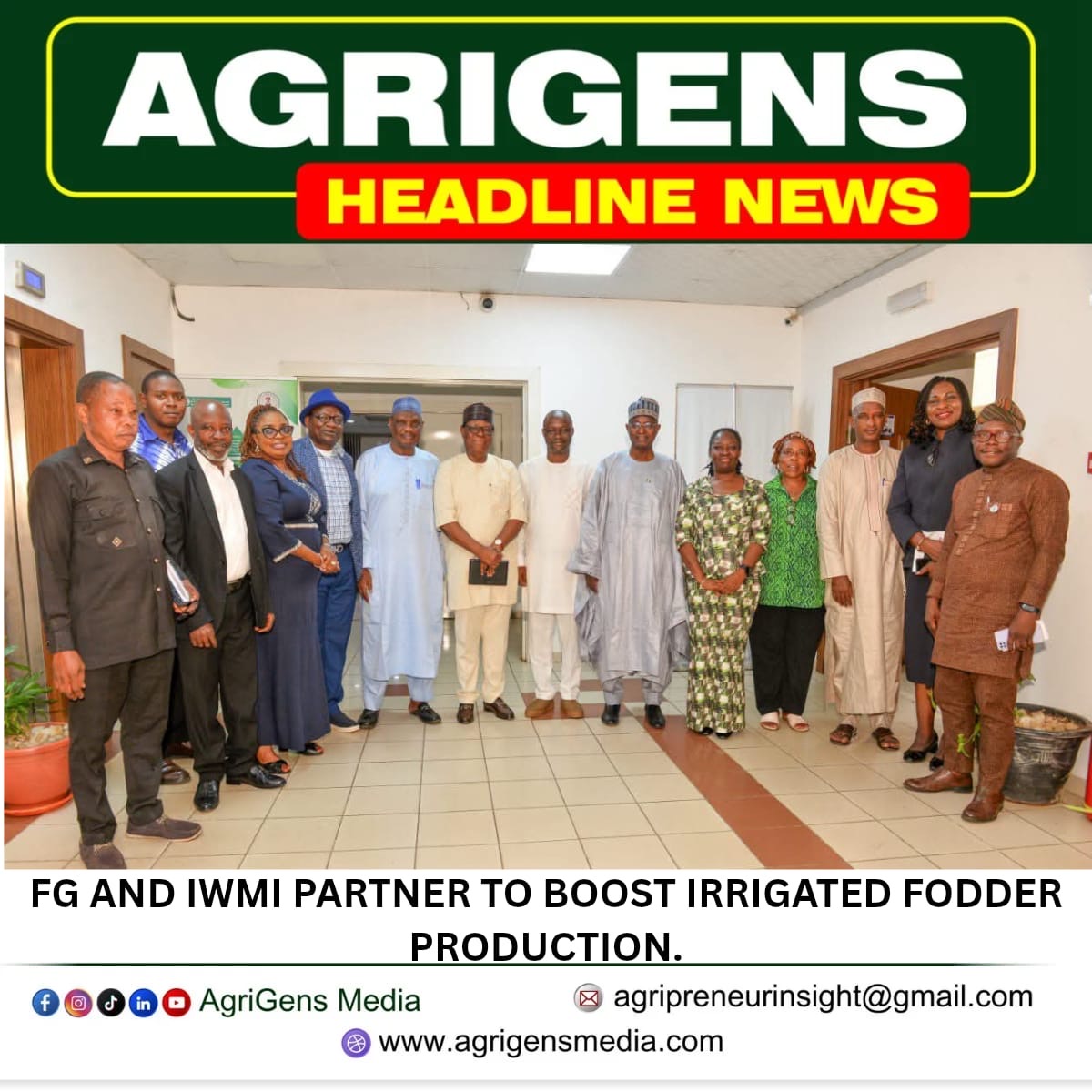
The Minister of Livestock Development, Alhaji Idi Mukhtar Maiha, stated this during a technical engagement with representatives of IWMI in Abuja.
The Minister said Nigeria has vast land and water resources capable of supporting all-season fodder production, stressing that effective management and utilisation of these resources are critical to unlocking the potential of the livestock sector.
According to him, the major challenge is not water availability but the efficient management and utilisation of the resource.
He noted that investments in modern irrigation infrastructure, solar-powered water systems and innovative water-management technologies would enhance year-round pasture production, reduce feed shortages and improve livestock productivity.
Maiha added that expanding irrigated fodder production would reduce pressure on natural resources, minimise farmer-herder conflicts and create new economic opportunities for farmers, pastoralists, women and youths across the livestock value chain.
Reaffirming the Ministry’s commitment to implementing the National Livestock Growth Acceleration Strategy, NL-GAS, the Minister assured development partners of continued collaboration with research institutions, international organisations and the private sector to develop practical, science-driven and sustainable solutions for the livestock industry.
Earlier, representatives of IWMI, led by Dr Adebayo Oke, highlighted the Institute’s technical support to Nigeria in water resource management, irrigation development and sustainable agricultural production.
The team recalled IWMI’s contribution to the development of the National Livestock Master Plan, particularly through technical expertise on water-related issues and the integration of water resource management into national livestock planning.
The Institute identified three immediate priority areas for collaboration with the Ministry.
These include a comprehensive assessment of water resources and flood dynamics to support irrigated fodder production, development of Nigeria’s first national reference report on year-round fodder production and the implementation of pilot irrigated fodder projects in selected locations across the country.
The experts noted that Nigeria currently lacks a comprehensive national database and reference report on fodder production to guide policy formulation and investment decisions.
They expressed IWMI’s readiness to provide technical support for the development of the report and a practical roadmap for sustainable fodder production.
The delegation also presented successful irrigation and solar-powered water-management initiatives implemented in other African countries, noting that similar technologies could be adapted to Nigeria to improve pasture development and livestock feed production.
IWMI emphasised that irrigation should be considered not only as a tool for crop production but also as a strategic investment in livestock development, particularly in ensuring the availability of quality fodder throughout the year.
The team further highlighted the economic potential of the fodder industry, noting that quality fodder seeds have significant market value and that increased local production could attract investment, create jobs, reduce production costs and strengthen Nigeria’s livestock value chain.
IWMI reaffirmed its commitment to supporting the Federal Ministry of Livestock Development through technical assistance, research, policy development and capacity building to promote sustainable water management and enhance livestock production.
The meeting ended with both parties reaffirming their commitment to deepening collaboration and delivering practical, innovative and science-based solutions to boost livestock productivity, strengthen food security and improve the livelihoods of livestock producers across Nigeria.