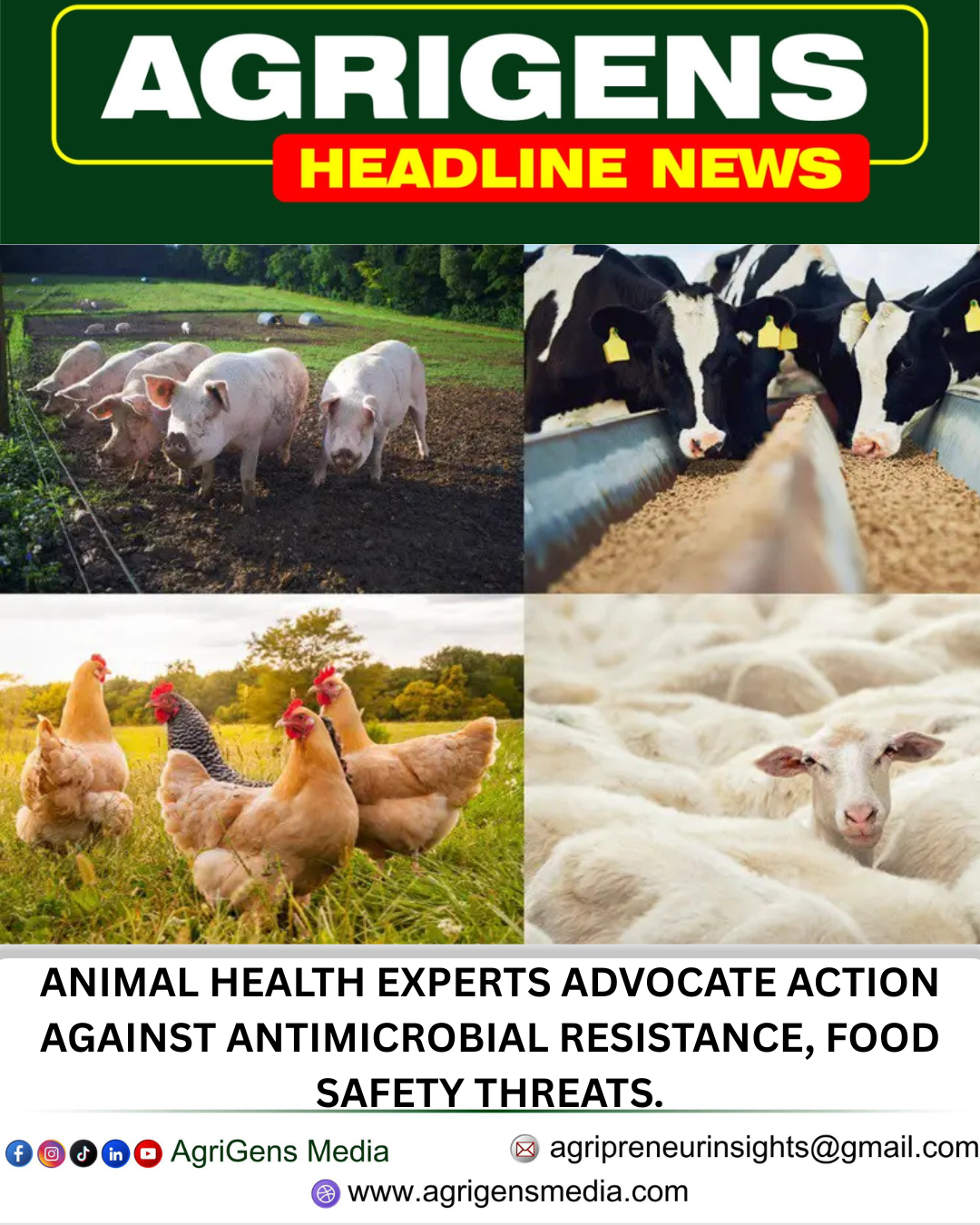
Animal health experts have called for stronger and coordinated measures to address the growing threat of antimicrobial resistance (AMR) and its impact on food safety, public health and livestock productivity across the agricultural sector.
The experts made the call during discussions on the increasing misuse and overuse of antibiotics in animal production, warning that antimicrobial resistance poses serious risks to both human and animal health if urgent interventions are not implemented.
According to stakeholders, the indiscriminate use of antimicrobial drugs in livestock farming has contributed to the emergence of resistant bacteria, making infections more difficult and costly to treat. They stressed that the situation could undermine food security, reduce livestock efficiency and threaten global health systems.
The professionals further emphasised the need for improved veterinary regulation, responsible drug administration, enhanced disease surveillance and increased awareness among farmers and livestock handlers on the dangers associated with improper antibiotic usage.
They also advocated stronger collaboration among government agencies, veterinary professionals, researchers, farmers and international development partners to promote sustainable animal health practices and strengthen food safety standards.
Experts noted that adopting the One Health approach which integrates human, animal and environmental health management remains critical to combating antimicrobial resistance and ensuring safer food production systems.
They urged policymakers to prioritise investments in animal health infrastructure, laboratory capacity, farmer education and biosecurity measures capable of reducing disease outbreaks and limiting dependence on antimicrobial drugs within the livestock industry.
The stakeholders maintained that proactive action against antimicrobial resistance would not only protect public health but also support sustainable livestock production, agricultural development and economic stability.