The Federal Government has announced plans to strengthen monitoring of poultry import allocations and enforce stricter performance measures to address supply shortages, improve access to day-old chicks and accelerate the growth of Nigeria’s poultry industry.
The initiative follows concerns over the underutilisation of approved import quotas by some operators a situation that has contributed to shortages of day-old chicks, rising production costs and reduced opportunities for poultry farmers across the country.
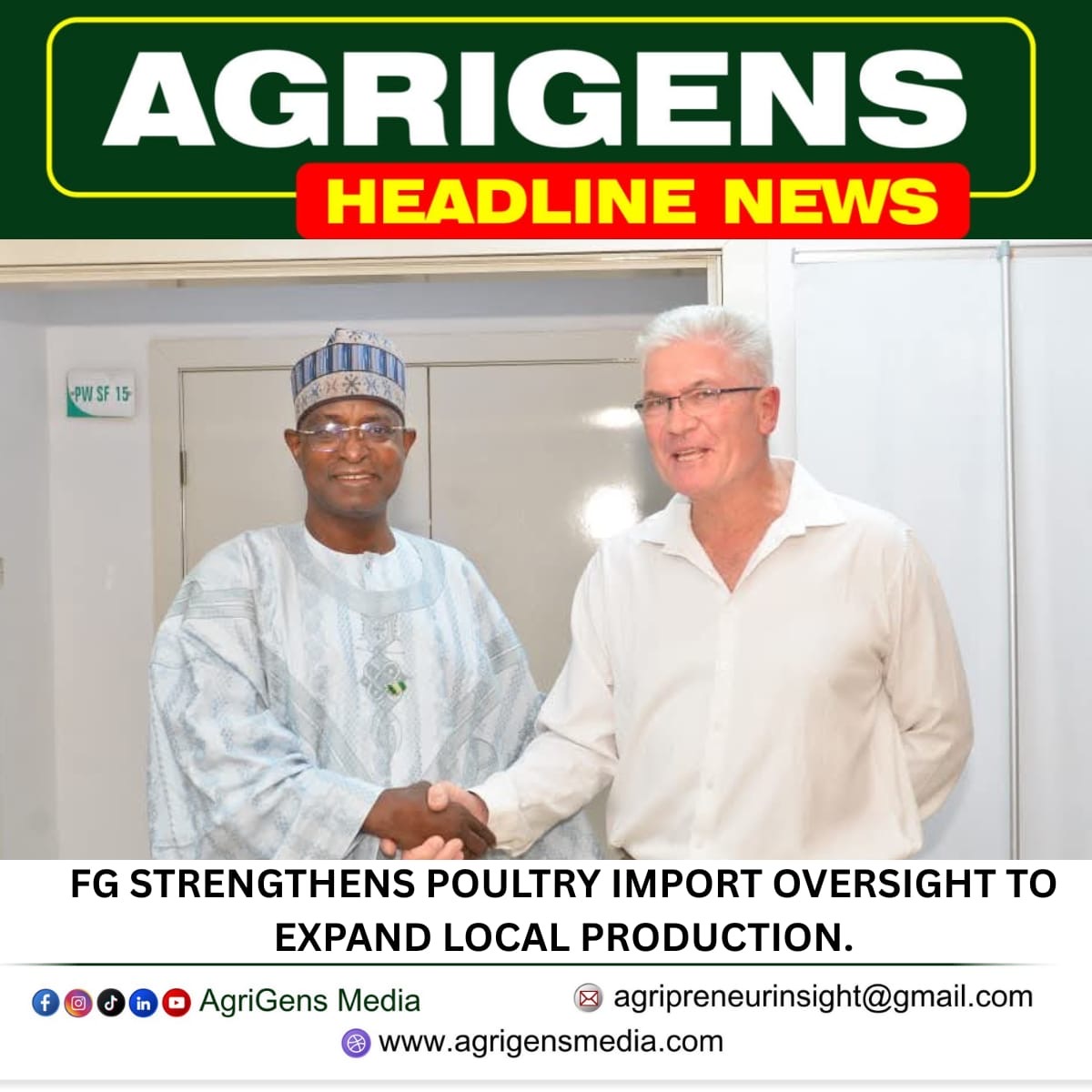
Speaking during a meeting with the Managing Director of Valentine Chickens, Leon Gunter and the company’s National Operations Manager, Samuel Adediji, on Wednesday, June 10, 2026, the Honourable Minister of Livestock Development, said government interventions in the poultry sector must deliver tangible benefits to farmers and consumers.
According to the Minister, government support should translate into increased production, improved availability of poultry inputs and wider access for farmers nationwide.
He noted that industry assessments revealed that a significant proportion of approved poultry import allocations had not been fully utilised, creating supply constraints that have contributed to persistent increases in the cost of day-old chicks.
Maiha stressed that the government’s objective is to ensure that opportunities created through public policy result in higher production, lower barriers to entry for farmers, improved affordability and sustainable growth within the poultry value chain.
He added that future allocations would be closely monitored and tied to performance, emphasizing that operators granted approvals must demonstrate implementation and measurable outcomes.
As part of efforts to strengthen domestic production capacity, Valentine Chickens presented a proposal for a 5.6 million-dollar investment in local grandparent stock production infrastructure. The project is aimed at reducing dependence on imported parent stock and enhancing Nigeria’s poultry value chain.
The investment is being undertaken in partnership with a global leader in poultry genetics. The proposal includes the establishment of specialised breeding facilities and advanced biosecurity systems designed to significantly increase local poultry production and support the long-term development of the sector.
Speaking on the proposal, Gunter described the initiative as a strategic investment in poultry genetics that would strengthen Nigeria’s capacity for local bird production.
At full capacity, the project is expected to generate 2 million parent stock females annually from the importation of 116,800 grandparent breeding chicks. This is projected to produce 273 million commercial broiler chickens and approximately 378,000 metric tonnes of chicken meat each year.
The Minister also disclosed that the Ministry is establishing a centralised national database to track all imported grandparent stock and parent stock eggs and chicks. He said the new regulatory framework is intended to improve transparency, support smallholder farmers, increase poultry consumption and ensure that local production effectively meets the needs of Nigerians.
The government believes the measures will strengthen the poultry industry’s contribution to food security, job creation and economic growth while reducing dependence on imports over the long term.