Poultry farmers across Nigeria have called on the Federal Government to urgently address persistent challenges of poor power supply and insecurity, warning that the issues are threatening the sustainability of the industry.
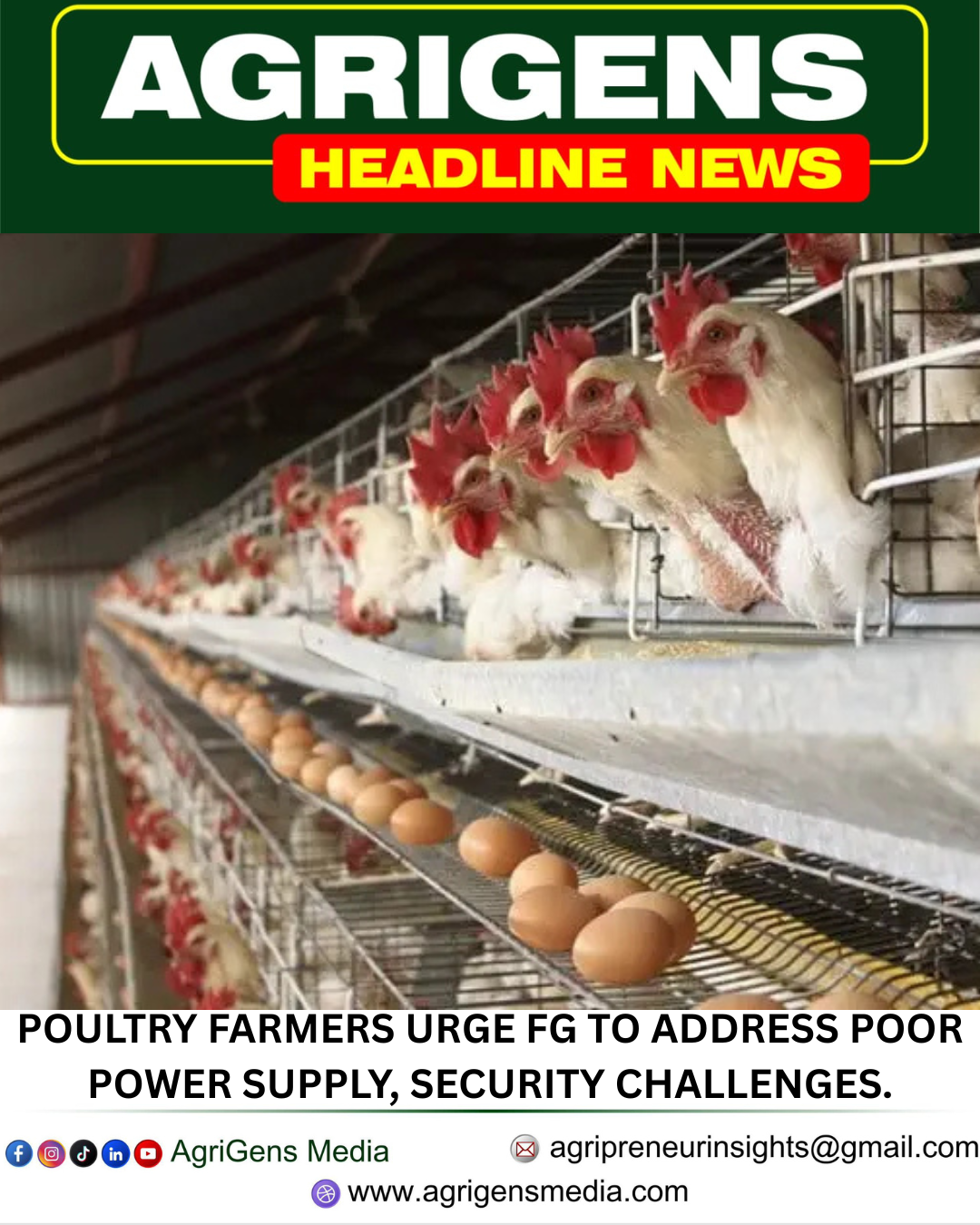
Stakeholders in the poultry value chain disclosed that irregular electricity supply has significantly increased the cost of production, as farmers are forced to rely on diesel-powered generators to run hatcheries, lighting systems, and temperature control equipment. This has led to rising operational expenses and reduced profitability.
According to farmers, energy costs now account for a substantial portion of production, especially for large-scale operators who depend on constant power for brooding, feeding systems, and cold storage. The situation has forced some producers to scale down operations, while others are struggling to remain viable.
In addition to power challenges, farmers raised concerns over insecurity, including theft, farm invasions, and attacks in rural areas. These incidents have resulted in loss of birds, equipment, and investments, discouraging further expansion in the sector.
Industry players warned that the combined impact of high energy costs and insecurity could lead to reduced poultry production, which may in turn drive up the prices of eggs and poultry meat, key sources of protein for many Nigerians.
Stakeholders emphasized that the poultry industry plays a vital role in job creation, food security, and economic development, and requires urgent support to remain stable and competitive.
They called on the government to implement measures such as improving electricity supply, promoting alternative energy solutions like solar power, and strengthening security in farming communities.
Experts also highlighted the need for broader interventions, including access to affordable feed, financing, and infrastructure, to support the growth of the poultry sector.
Farmers further urged policymakers to engage more closely with industry stakeholders to develop practical and sustainable solutions to the challenges facing the sector.
While expressing optimism about the potential of the poultry industry, stakeholders stressed that without immediate action, the current challenges could undermine efforts to increase local production and achieve food security.
The call for intervention underscores the urgent need for coordinated efforts to create an enabling environment where poultry farmers can operate efficiently and contribute meaningfully to Nigeria’s agricultural economy.