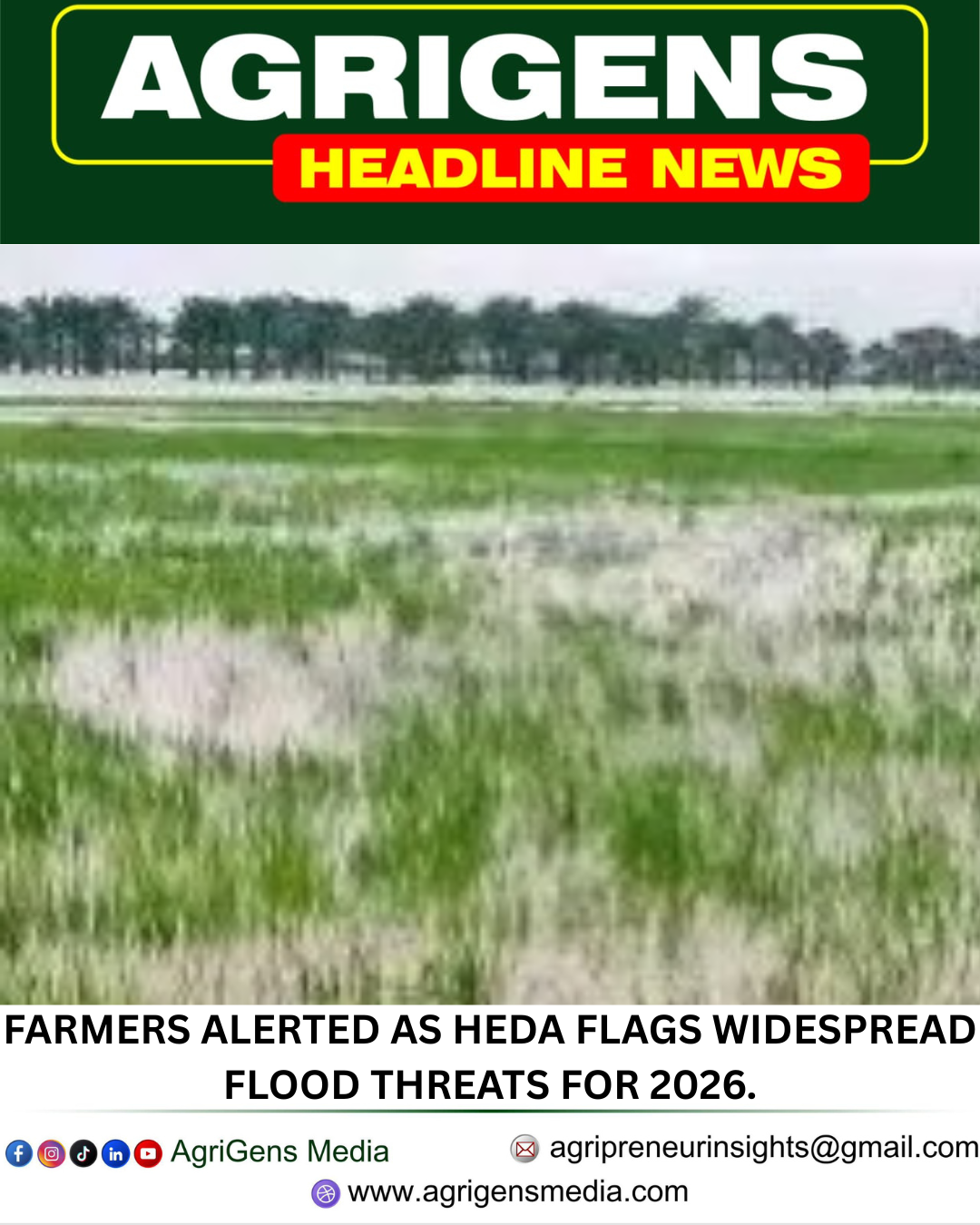
Farmers across Nigeria have been placed on high alert following warnings by the Human and Environmental Development Agenda over potential widespread flooding expected during the 2026 rainy season.
The organisation raised concerns that several states could experience above-normal rainfall and heightened flood risks, which may significantly disrupt agricultural activities and threaten food production if proactive measures are not taken.
According to HEDA, the warning is based on climate projections and seasonal forecasts indicating increased rainfall intensity, rising water levels in major rivers, and the likelihood of overflow in flood-prone areas. These conditions could lead to the destruction of farmlands, displacement of communities, and loss of crops and livestock.
Farmers, particularly those in low-lying and riverine areas, have been advised to take precautionary steps such as early planting, use of flood-resistant crop varieties, proper drainage systems, and relocation of vulnerable assets to safer locations.
The organisation emphasized the need for early warning systems and effective communication channels, ensuring that farmers receive timely information to guide their decisions throughout the farming season.
HEDA also called on government agencies at all levels to intensify efforts toward flood control, infrastructure maintenance, and emergency preparedness, including clearing drainage systems and reinforcing embankments in high-risk zones.
Stakeholders noted that flooding has become a recurring challenge in Nigeria, often resulting in significant agricultural losses, food shortages, and economic setbacks. The anticipated 2026 floods could further strain the country’s food systems if not properly managed.
Experts highlighted the importance of adopting climate-smart agricultural practices, including improved water management, diversification of crops, and the use of resilient farming techniques to reduce vulnerability.
In addition, there were calls for increased investment in irrigation and water control infrastructure, which can help mitigate the impact of excessive rainfall while supporting dry-season farming.
While the warning has raised concerns, stakeholders believe that with adequate planning, coordination, and timely intervention, the potential impact of flooding can be significantly reduced.
Farmers are therefore urged to remain vigilant, stay informed, and collaborate with extension services and local authorities to protect their livelihoods and ensure continued agricultural productivity amid the anticipated climate challenges.