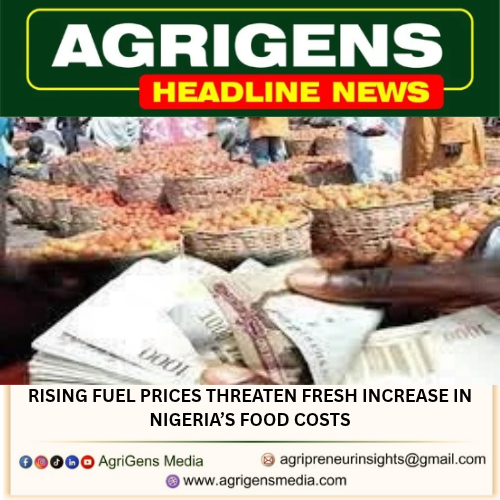
Rising petrol and diesel prices are threatening to push food costs higher across Nigeria, as farmers, traders, transporters and processors face increased expenses for production, transportation, storage and processing.
Petrol prices have risen to about ₦1,400 per litre in Lagos and Abuja and ₦1,500 in parts of northern Nigeria, while diesel has exceeded ₦2,000 per litre, raising concerns that higher energy costs could reverse recent moderation in food prices.
At Mile 12 Market in Lagos, tomato trader Kazeem said the cost of transporting produce had increased significantly, forcing traders to adjust their prices.
“Transport has gone up considerably. What we used to spend about ₦150,000 to bring tomatoes to Lagos can now cost close to ₦200,000,” he said.
Although tomato prices recently declined from about ₦80,000 per large basket in July to ₦55,000 in September, traders warned that rising haulage costs could limit further reductions.
Similar pressures are affecting grain traders in Kano, poultry farmers in Osun, dairy operators in Kaduna and meat processors in Lagos. Higher fuel costs are increasing expenses for transporting maize, producing animal feed, running generators, processing meat and moving fresh milk.
The President of the All Farmers Association of Nigeria (AFAN), Farouk Rabiu-Mudi, has warned that rising transportation costs are placing significant pressure on the agricultural value chain. He said haulage charges on major routes had increased from between ₦400,000 and ₦800,000 to as much as ₦3 million to ₦4 million per trip.
Processors are also facing higher operating costs. A rice mill operator in Kano, Bala Dayyabu, previously said small-scale millers could spend about ₦700,000 monthly on energy, forcing some to operate below capacity.
The rising costs could affect prices of essential food items, including maize, eggs, poultry, milk, beef and processed grains, as businesses transfer some of their additional expenses to consumers.
Meanwhile, the Chairman of the Niger State chapter of the Christian Association of Nigeria, Most Rev. Dr Bulus Dauwa Yohanna, has urged President Bola Tinubu to address the cost-of-living crisis, calling for lower fuel and food prices, reduced inflation and a stronger currency.
CAN President Archbishop Daniel Okoh also urged the Federal Government to prioritise affordable food, transportation and energy, stressing that economic reforms should translate into tangible improvements in household living conditions.
Although the Federal Government has continued to promote domestic food production and agricultural investment, stakeholders warn that sustained increases in fuel prices could undermine efforts to reduce food costs.
The impact will depend on how much of the additional expenses farmers, traders and processors absorb or pass on to consumers, but rising energy costs are increasing the risk of another food-price surge in the coming weeks.