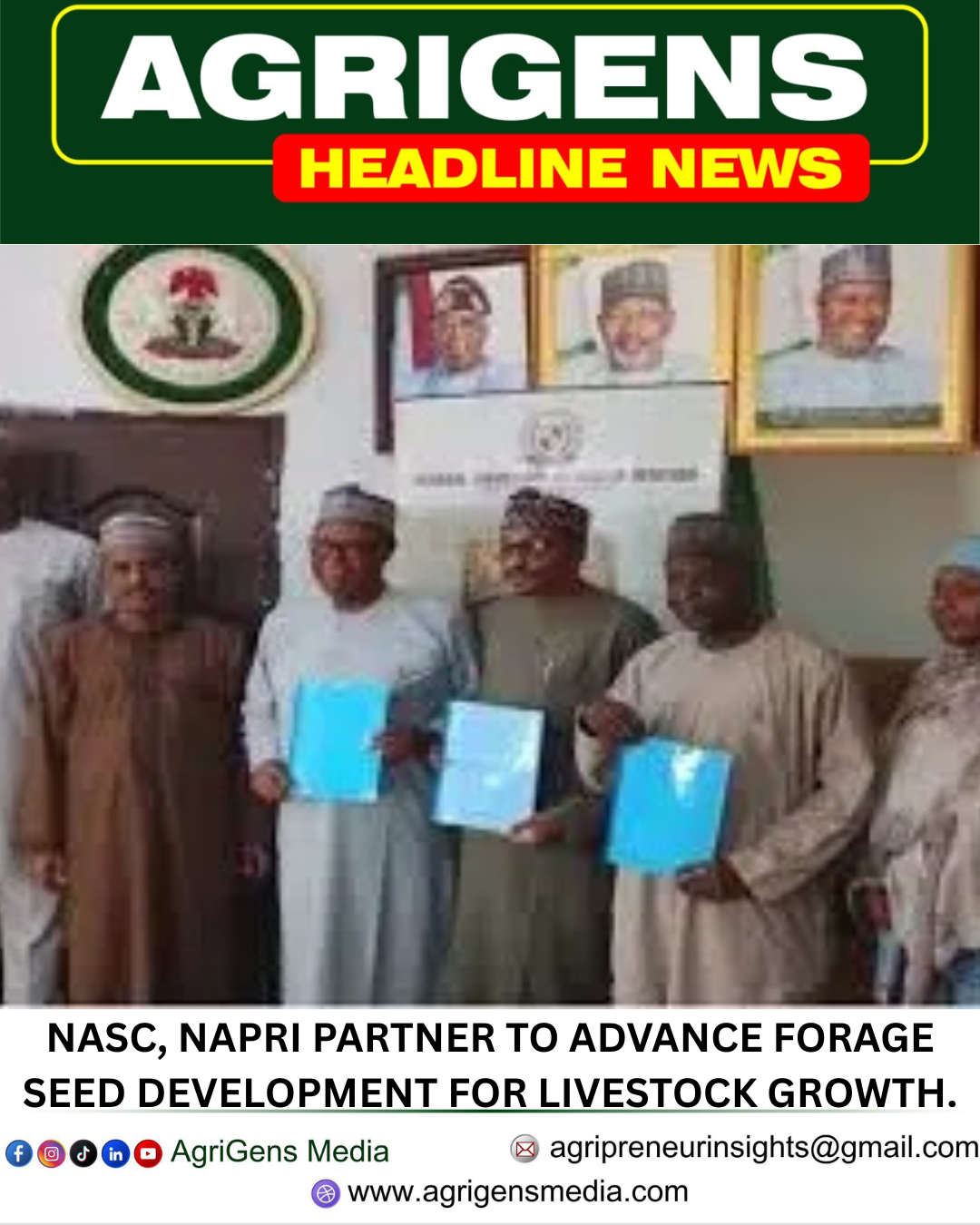
Nigeria’s efforts to improve livestock nutrition and strengthen food production received a significant boost on Wednesday as the National Agricultural Seeds Council (NASC) and the National Animal Production Research Institute (NAPRI) entered into a strategic partnership focused on forage seed development.
The partnership was formalised through the signing of a Memorandum of Understanding (MoU) in Abuja, bringing together key stakeholders from the livestock, research and seed regulation sectors to chart a course towards improved forage research, seed quality control, commercial production and sustainable feed supply for livestock farmers nationwide.
Among the dignitaries present at the signing ceremony were the Director General of NASC, Hon. Fatuhu Muhammed, the Senior Adviser to the Minister of Livestock Development, Prof. E.A. Iyayi, and the Executive Director of NAPRI, Prof. M.R. Hassan.
Stakeholders at the event described the collaboration as a timely intervention aimed at addressing persistent challenges of inadequate forage supply, declining pasture quality and inefficient livestock feeding systems that have continued to limit productivity within Nigeria’s livestock industry.
Under the terms of the agreement NAPRI will lead research activities and the development of improved forage varieties suitable for Nigeria’s diverse ecological zones while NASC will oversee seed certification, quality assurance, standards enforcement and regulatory supervision to ensure the production and distribution of high-quality forage seeds.
The partnership will also facilitate the integration of forage seed systems into NASC’s digital platforms, enabling improved seed traceability, electronic certification and more efficient data management. In addition, both institutions will collaborate on technical training, extension services and capacity-building programmes for researchers, seed producers and other stakeholders across the country.
Speaking on the significance of the initiative participants noted that improved access to quality forage seeds would enhance livestock nutrition, support higher productivity and contribute to the development of a more sustainable livestock sector.
They further expressed optimism that the collaboration would strengthen Nigeria’s livestock value chain, reduce feed-related constraints and support the Federal Government’s broader agenda of achieving food security, economic growth and agricultural transformation.
The partnership is expected to play a critical role in promoting sustainable feed production, improving livestock performance and creating new opportunities for investment and innovation within the livestock and seed sectors.