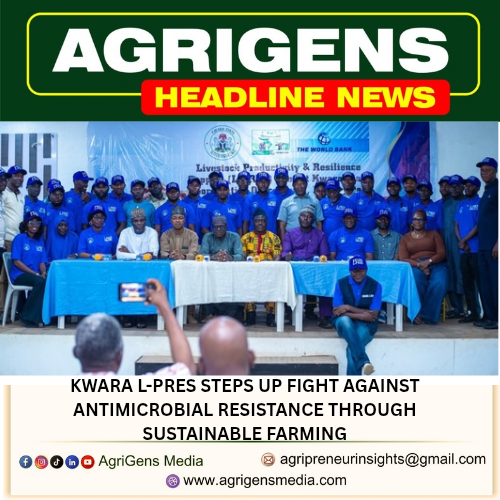
The Kwara State Government has intensified efforts to promote sustainable livestock production, strengthen food safety and protect public health through responsible pest management and the appropriate use of antibiotics in animal production.
The State Commissioner for Livestock Development, Mrs Oloruntoyosi Thomas, represented by the ministry’s Permanent Secretary, Alhaji Yahaya Mohammed, made this known while declaring open a training workshop on Integrated Pest Management (IPM) and Antimicrobial Resistance (AMR) Control.
Thomas described the indiscriminate use of pesticides and the misuse of antibiotics as major threats to agricultural productivity, environmental sustainability and human and animal health.
She warned that excessive pesticide application could destroy beneficial organisms, contaminate the soil and expose farmers to health risks. She also noted that the misuse of antibiotics contributes to antimicrobial resistance, a growing public health concern that threatens the effectiveness of medicines used to treat infections in humans and animals.
According to her, addressing these challenges requires urgent attention and coordinated action among farmers, veterinarians, agricultural extension officers and other stakeholders across the food production chain.
The commissioner described the training as more than a routine capacity-building exercise, noting that it forms part of the One Health approach, which recognises the close relationship between human, animal and environmental health.
She urged farmers to prioritise preventive pest management strategies, including cultural, biological and mechanical control methods, before resorting to chemical pesticides.
Thomas also charged veterinarians, animal scientists and agro-dealers to promote the responsible use of antibiotics, warning against the sale and administration of such medicines without appropriate diagnosis and professional guidance.
She encouraged participants to become advocates for the rational use of pesticides and antimicrobial medicines in their communities, stressing that improved knowledge and responsible agricultural practices would promote safer food production and healthier communities.
The commissioner commended the organisers, facilitators and development partners for supporting the initiative, expressing confidence that the knowledge acquired would improve farm profitability, strengthen sustainable agricultural practices and enhance food safety across Nigeria.
She expressed optimism that the workshop would equip participants with practical skills to address pest-related challenges, reduce the risks associated with antimicrobial resistance and promote more sustainable agricultural production systems.
Also speaking, the Kwara State Livestock Productivity and Resilience Support Project (L-PRES) Coordinator, Mr Olusoji Oyawoye, urged participants to share the knowledge gained at the workshop with other members of their communities.
Oyawoye noted that disseminating the knowledge would help improve public health, promote safer livestock production and make livestock enterprises more profitable.
He explained that animal health challenges could extend beyond livestock, as humans might be exposed to diseases and harmful substances through animal products or direct contact with infected animals.
“Animal products affect human lives indirectly. Some animals may have health defects or residual antibiotics that could affect humans. When animals are sick, they interact with human beings, who may also become sick,” he said.
Oyawoye further explained that the close relationship between humans, animals and their shared environment makes it necessary to adopt an integrated approach to addressing health challenges across the three areas.
A major highlight of the workshop was the technical presentations delivered by veterinary specialists and researchers, including Professor Ismail Odetokun, a Professor of Veterinary Medicine at the University of Ilorin Veterinary Teaching Hospital, Dr Solomon Olorunleke, a veterinary epidemiologist and antimicrobial resistance specialist, Dr Adah Deborah, an aquatic veterinarian, researcher and antimicrobial resistance expert and Dr Bukola Richards, an Animal Health Officer with the Kwara L-PRES Project.
The presentations focused on strengthening knowledge of sustainable pest management, responsible antimicrobial use and strategies for reducing the risks associated with antimicrobial resistance in livestock production.