The Federal Government has reiterated its commitment to modernising Nigeria’s livestock sector through safer transportation systems, improved market infrastructure and stronger stakeholder collaboration.
The Honourable Minister of Livestock Development, Alhaji Idi Mukhtar Maiha, made this known on Saturday, June 20, 2026, at the North-West Zonal Symposium and Stakeholder Dialogue on Safer and Efficient Livestock Transportation in Nigeria, held in Katsina State and organised by the Amalgamated Union of Foodstuff and Cattle Dealers of Nigeria (AFUCDN).
The symposium, themed “Enhancing Road Safety in Livestock Transportation and Addressing Blockages on National Highways,” also featured the official launch of the union’s member e-registration exercise. The event brought together representatives of government, security agencies, livestock traders, producers and other key industry stakeholders.
Declaring the symposium open, the Executive Governor of Katsina State, Dikko Umar Radda, described the forum as timely and critical to the development of the livestock industry, noting that livestock movement and agricultural trade remain central to the livelihoods of millions of Nigerians in both rural and urban communities.
The Governor highlighted the North-West’s strategic role as a major livestock production hub and called for stronger coordination among traders, transporters, processors and security agencies to drive sustainable growth across the value chain.
While acknowledging challenges such as insecurity, transportation bottlenecks and inadequate market infrastructure, Governor Radda reaffirmed the state government’s commitment to modernising livestock production, improving market facilities and promoting peaceful coexistence among communities.
He further disclosed plans by the state government to establish a modern 2,000-capacity abattoir aimed at boosting livestock processing, value addition and industrial development within the sector.
In his remarks, the Minister stressed the need to transition Nigeria’s livestock industry from the traditional movement of live animals to a modern, value-driven economy capable of creating jobs, increasing exports and improving national food security.
He described the Mai’Adua International Livestock Market as a strategic national asset that should evolve from a weekly trading centre into a full-scale livestock exchange hub operating continuously throughout the year.
According to the Minister, Nigeria must focus on exporting processed livestock products and value-added goods rather than exporting raw value through live animal trade.
Maiha also highlighted ongoing federal investments in veterinary control posts along major livestock corridors as part of efforts to strengthen traceability systems, improve animal health standards and enhance market efficiency.
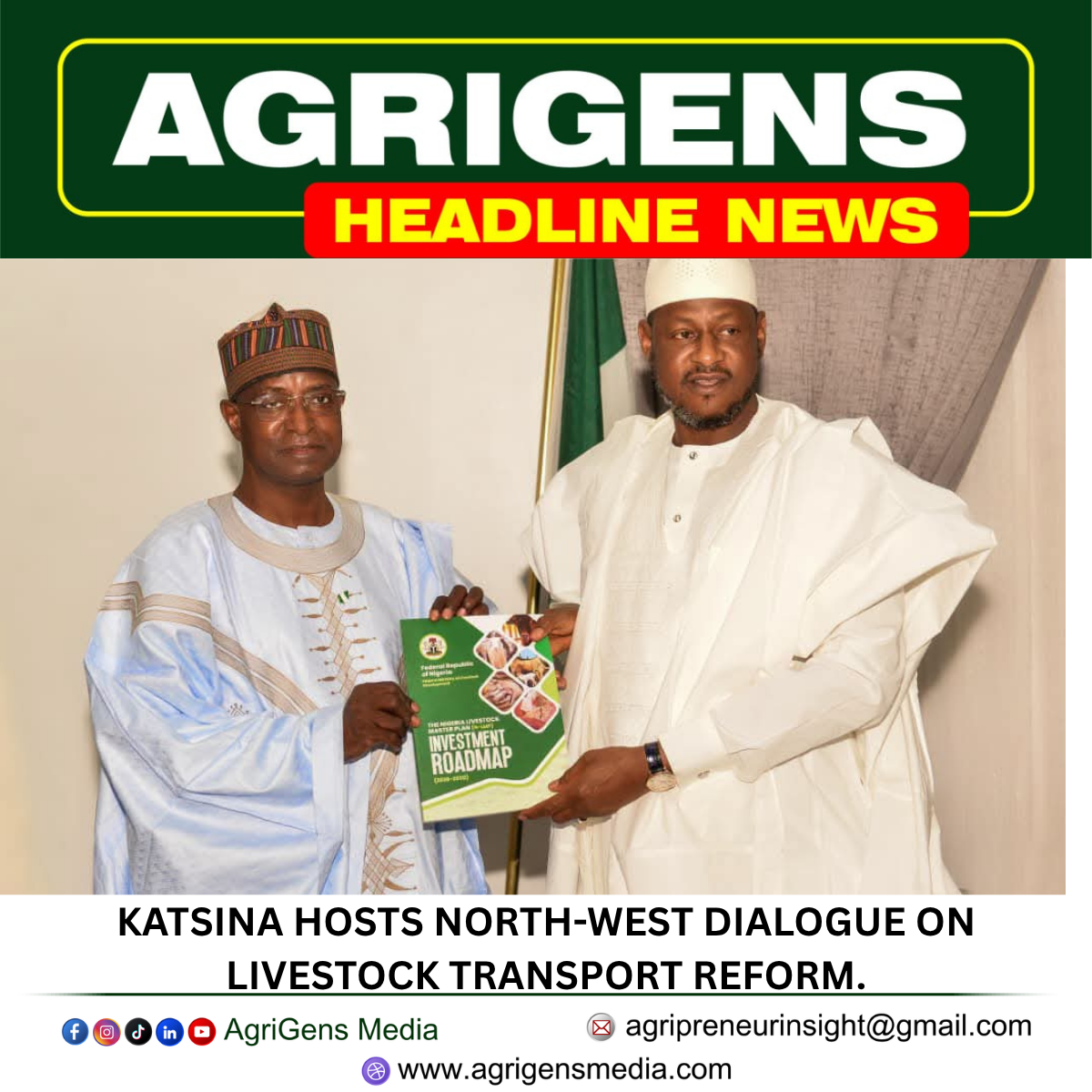
As part of the event, the Minister formally presented the National Livestock Transformation Roadmap to the Katsina State Governor. The roadmap outlines strategic interventions across the livestock value chain and is designed to support states in unlocking the sector’s economic potential while advancing national objectives on food security, rural development and export diversification.
Following the symposium, the Minister visited three leading livestock enterprises in the state, including Maidebino Farms, which maintains a herd of approximately 30,000 sheep and goats. He described the facility as a centre of excellence in livestock production.
He also commended The Farm Katsina and Songhai Global Farm Nigeria Limited for their contributions to dairy development and crossbreeding innovations aimed at reducing Nigeria’s dependence on imported dairy products.
Earlier, the Katsina State Commissioner for Livestock Development, Professor Ahmad Mohammad Bakori, disclosed that the proposed 2,000-capacity abattoir, expected to be completed within 18 months of approval by the State Executive Council, would support meat processing, leather production and other livestock by-product industries, thereby creating jobs and stimulating economic growth.