

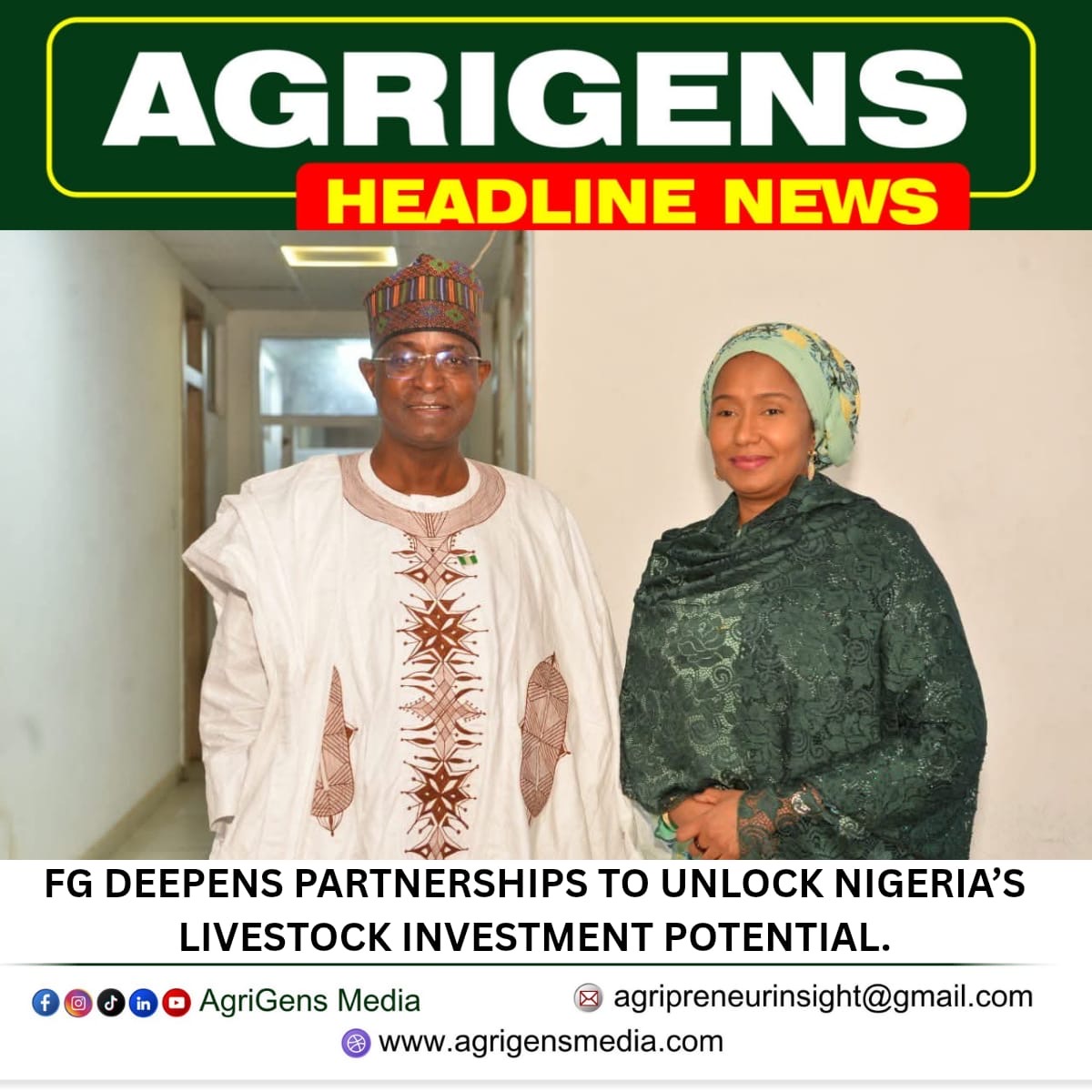
The Federal Government has reaffirmed its commitment to transforming Nigeria’s livestock sector through strategic partnerships, investment promotion and the development of sustainable value chains capable of creating jobs, enhancing food security and driving economic growth.
The Minister of Livestock Development, Alhaji Idi Mukhtar Maiha, stated this during a meeting with an international delegation led by Safia Boly, Senior Vice President for Africa at Heifer International.
Maiha highlighted the vast investment opportunities in Nigeria’s livestock industry and called for stronger collaboration in critical areas, including fodder production, livestock breeding and capacity building.
The Minister noted that Nigeria has abundant natural resources capable of supporting large-scale fodder cultivation, particularly in Kano State, which has several dams, including the Challawa and Bagauda Dams.
He explained that the Ministry is exploring the possibility of dedicating some of these water resources to fodder production while addressing challenges related to access to quality seeds through partnerships with development organisations.
Maiha said that while Nigeria is learning from successful livestock development models in East Africa, the country remains committed to adapting global best practices to its local realities to maximise available opportunities.
He pledged the Ministry’s readiness to participate in future engagements and encouraged the early scheduling of meetings to ensure effective planning and sustained collaboration.
The Minister also urged the delegation to reconsider supporting the forthcoming National Livestock Education and Business (NLEB) initiative, describing it as a cross-cutting programme that could significantly impact the livestock sector while providing partners with an opportunity to contribute to Nigeria’s agricultural transformation.
Highlighting the growing confidence of local and international investors in Nigeria’s livestock sector, Maiha said the country is witnessing unprecedented investment interest.
He cited recent investments in the dairy industry, including a 490-million-dollar dairy financing initiative supported through the Nigeria Sovereign Investment Authority following President Bola Ahmed Tinubu’s state visit to the United Kingdom.
According to the Minister, another private investor is working with the Ministry to establish a 10,000-head cattle project on more than 6,000 hectares of land. The project will include a modern livestock training institution alongside commercial farming operations.
Maiha further disclosed that several investors are expressing interest in dairy production, red meat development and commercial fodder cultivation, while discussions are ongoing to position Nigeria as a major supplier of livestock products to Gulf countries.
He explained that Nigeria has a significant geographical advantage, with a flight time of about five hours to Gulf markets, compared with longer transit times from some competing livestock-exporting countries.
The Minister said that, combined with Nigeria’s abundant natural resources, affordable labour and strong political support, these advantages have made the country an increasingly attractive destination for livestock investment.
Maiha also highlighted the potential of Nigeria’s hides and skins industry, noting that some tanneries in Kano process as many as 50,000 goat skins daily, with similar facilities operating in Sokoto and Maiduguri.
He consequently directed relevant officials within the Ministry to commence the process of re-establishing a dedicated Hides and Skins Desk to coordinate activities and strengthen the value chain.
The Minister stressed that organised collection, processing and marketing of hides and skins could create thousands of jobs, particularly for young people, while improving incomes for rural communities.
Earlier, Safia Boly, Senior Vice President for Africa at Heifer International, said the delegation’s visit was aimed at deepening strategic alignment, operationalising shared priorities and institutionalising a government-led co-investment framework.
She reaffirmed Heifer International’s role as a technical and co-investment partner in supporting Nigeria’s livestock development goals.
Boly also proposed closer policy alignment with the Ministry and highlighted Heifer International’s innovations and initiatives, while proposing a co-investment mechanism directly with the Federal Ministry of Livestock Development.

