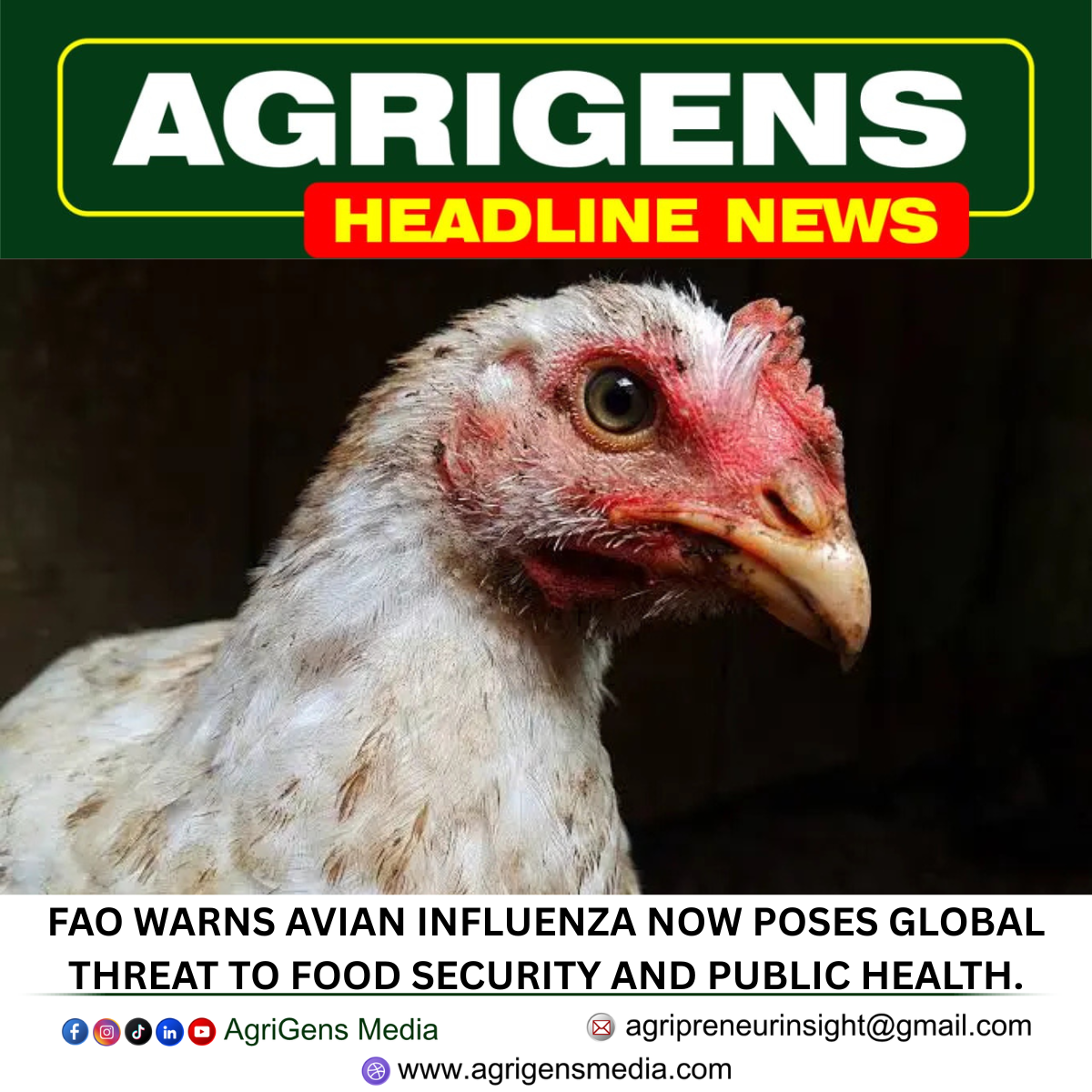
The Food and Agriculture Organization of the United Nations (FAO) has raised fresh concerns over the growing threat of avian influenza, warning that the disease has evolved beyond a poultry health issue into a rapidly expanding global challenge with serious implications for animal health, public health, food security and livelihoods.
In a public awareness message shared on its official Instagram page, the UN agency highlighted four major reasons governments, farmers, veterinarians and the public must remain vigilant as the virus continues to spread and evolve.
According to FAO, one of the greatest concerns is the virus’s ability to cross borders and infect multiple animal species. It explained that avian influenza is a transboundary disease capable of spreading across countries and affecting wild birds, domestic poultry, livestock, pets, wildlife and in some instances humans.
The organisation warned that the expanding range of susceptible hosts has heightened global concerns over the disease and reinforced the need for stronger surveillance and coordinated international responses.
FAO also noted that avian influenza viruses are evolving rapidly, increasing their ability to adapt to new hosts and environments. It said the continuous mutation of the virus makes outbreaks more difficult to predict, monitor and contain, underscoring the importance of sustained disease surveillance and rapid response systems.
The agency further observed that the geographical spread of the disease has reached unprecedented levels, with outbreaks now reported across Asia, Africa, Europe and the Americas.
According to FAO, what was once regarded primarily as an animal disease has become a global issue affecting food systems, public health, international trade and agricultural livelihoods.
To strengthen preparedness and reduce the impact of outbreaks, FAO said it is collaborating with governments and international partners to enhance disease surveillance, improve early detection, train veterinarians and animal health personnel, support vaccination programmes where appropriate and coordinate emergency response efforts.
The organisation added that it continues to provide technical assistance to farmers and frontline animal health workers, recognising their critical role in detecting outbreaks early and preventing wider transmission.
FAO stressed that effective control of avian influenza will require sustained international cooperation, stronger animal health systems and increased investment in disease prevention and preparedness.
It called on countries to strengthen cross-border collaboration, improve surveillance networks and prioritise early warning mechanisms to minimise the risk of future outbreaks.
The organisation reiterated that avian influenza is no longer solely an animal health issue but a global challenge that demands coordinated action to safeguard public health, protect food supplies and preserve livelihoods worldwide.