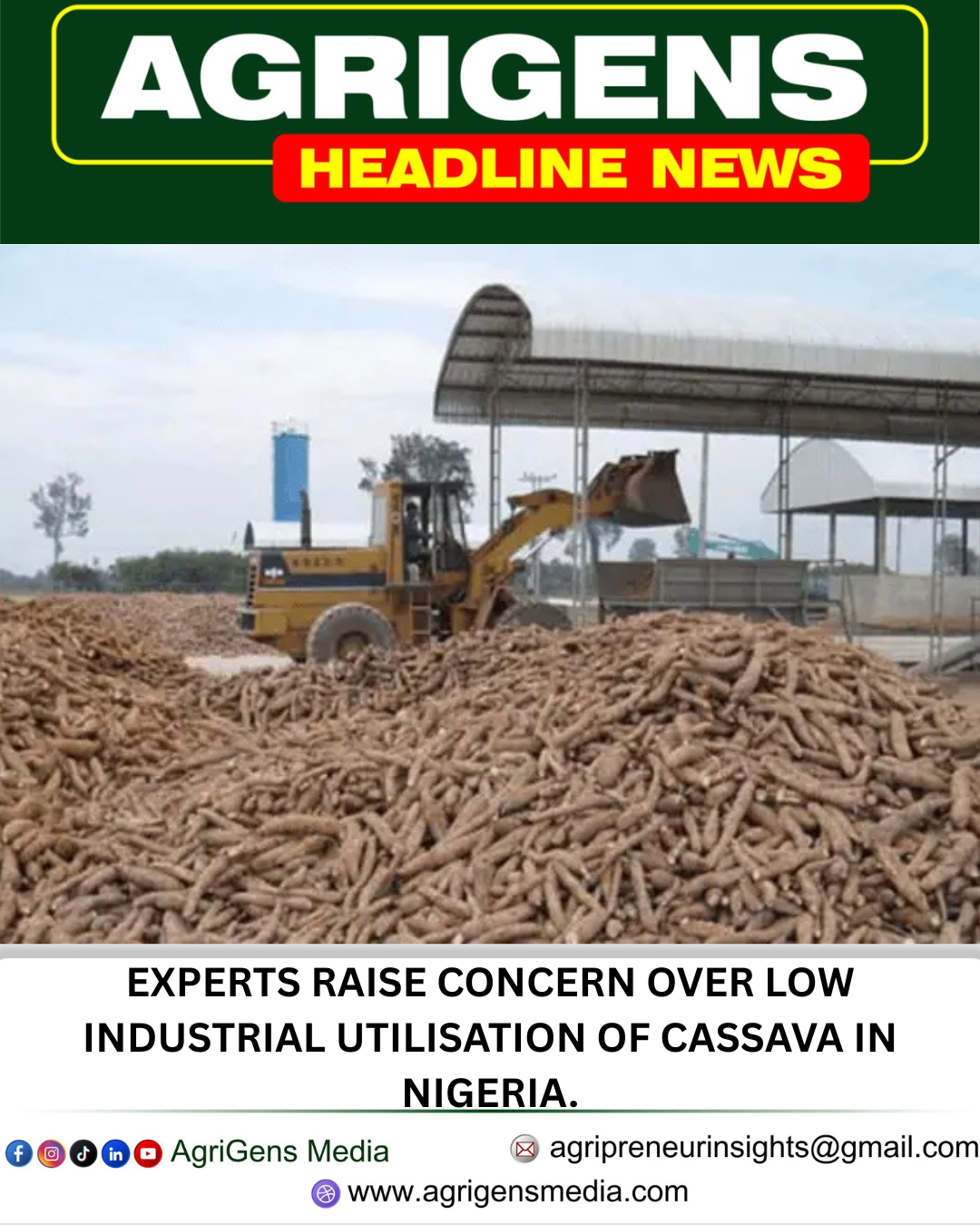
Agriculture and industry stakeholders have expressed concern over the low level of industrial utilisation of cassava in Nigeria despite the country maintaining its position as the world’s largest producer of the crop.
The concerns were highlighted during the 10th anniversary and Annual General Meeting of the Industrial Cassava Stakeholders Association of Nigeria held in Lagos where experts called for greater investment in value addition processing and market development within the cassava value chain.
Speaking at the event Eniola Fabusoro stated that Nigeria’s major challenge is no longer cassava production but the inability to effectively convert the crop into industrial and economic value.
According to him although Nigeria produces more than 63 million metric tonnes of cassava annually the country continues to lag behind several Southeast Asian nations in industrial processing exports and value-added production.
He noted that while Nigeria leads globally in cassava production volumes it has yet to maximise the crop’s economic potential through industrialisation and stronger market integration.
“The future of cassava must move beyond farming to industrialisation and market development” he said.
Also speaking the President of ICSAN, Segun Ladele disclosed that approximately 80 per cent of cassava produced in Nigeria is consumed as food while only a small proportion is utilised for industrial applications.
He attributed the challenges facing the sector to weak policy coordination inadequate industrial demand and the increasing importation of starch products that compete with locally processed alternatives.
The Vice-President of ICSAN and Founder of Psaltry International Company Limited Oluyemisi Iranloye warned that the influx of cheaper imported corn starch is posing a serious threat to Nigeria’s cassava processing industry and the livelihoods of millions of farmers dependent on the value chain.
According to her stronger measures are required to protect local processors and encourage investment in domestic cassava-based industries.
Meanwhile the Executive Director of the National Root Crops Research Institute Chiedozie Egesi, argued that Nigeria already possesses sufficient policies to drive cassava industrialisation but continues to face challenges related to implementation and political commitment.
He urged policymakers and industry stakeholders to reposition cassava beyond its traditional role in food security and harness its broader industrial applications in manufacturing, livestock feed production, starch processing, bio-industrial products and exports.
Stakeholders at the meeting emphasised that strengthening cassava industrialisation could significantly enhance rural incomes, create employment opportunities, increase export earnings, reduce import dependence and contribute to economic diversification.
They called for stronger collaboration among government agencies, private sector investors, research institutions and development partners to unlock the full potential of Nigeria’s cassava industry and transform the crop into a major driver of industrial growth and economic development.