

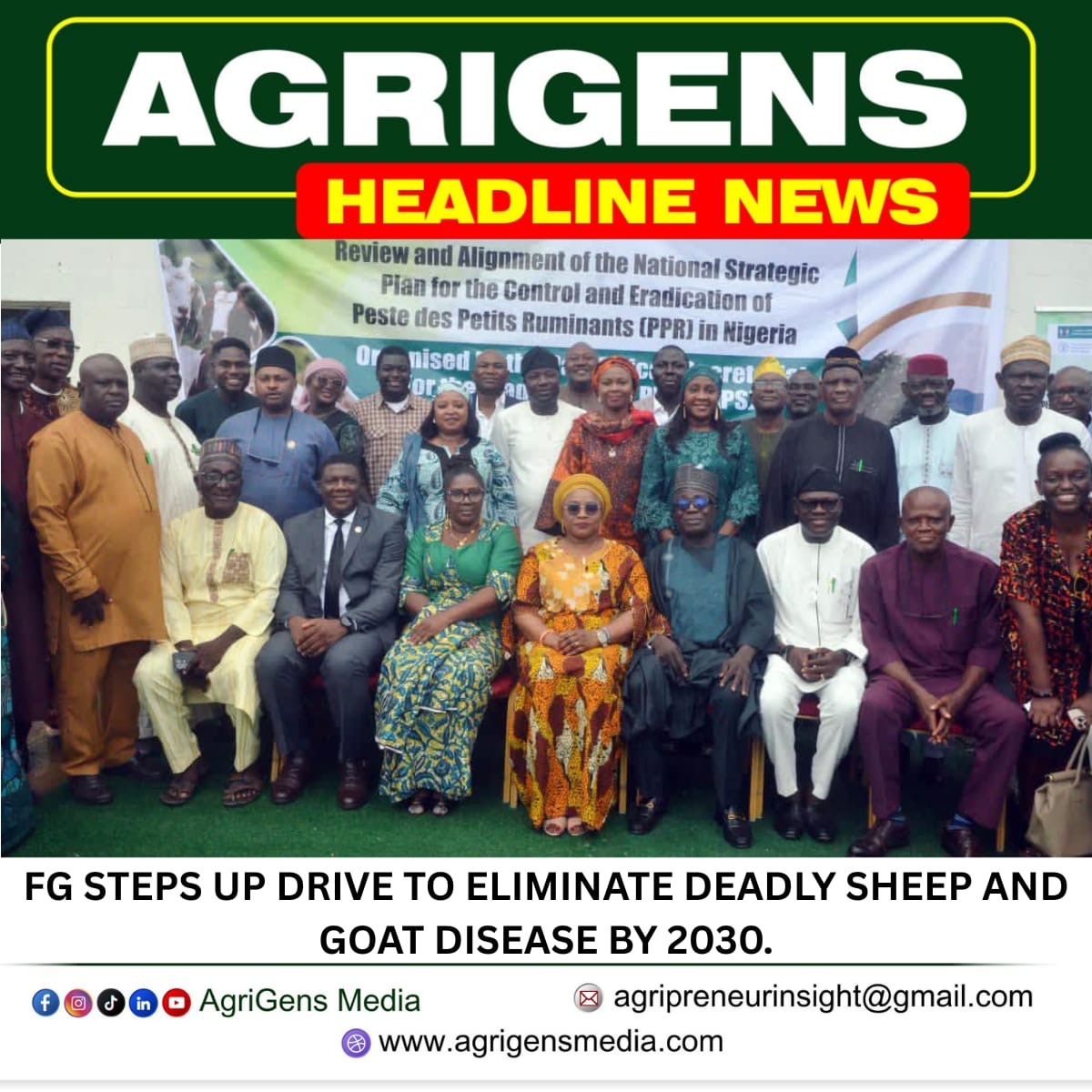
The Federal Government has reaffirmed its commitment to eradicating Peste des Petits Ruminants (PPR), a highly contagious viral disease affecting sheep and goats, by 2030 as part of efforts to boost livestock production, improve food security and strengthen rural livelihoods.
The Permanent Secretary of the Federal Ministry of Livestock Development, Dr. Chinyere Ijeoma Akujobi, made this known while declaring open a two-day stakeholders’ workshop on the review and update of Nigeria’s National Strategic Plan for the Control and Eradication of PPR, held in Abuja from July 16 to 18, 2026.
Dr. Akujobi described the fight against PPR as a national development priority, noting that eliminating the disease would reduce poverty, improve livestock productivity, strengthen rural economies and expand trade opportunities.
She said Nigeria remains fully committed to the global campaign led by the Food and Agriculture Organization (FAO) and the World Organisation for Animal Health (WOAH) to eradicate PPR by 2030. According to her, the government has intensified disease surveillance, laboratory capacity, outbreak investigations, vaccination campaigns, stakeholder engagement and disease reporting systems to curb the spread of the disease.
The Permanent Secretary noted that Nigeria is home to more than 200 million sheep and goats, making the protection of small ruminants essential to the livelihoods of millions of households and the growth of the livestock sector.
She added that the workshop would produce a comprehensive National Strategic Plan for 2026–2030, integrating veterinary services, cross-border disease control measures and risk management strategies.
Earlier, the Chief Veterinary Officer of Nigeria, Dr. Samuel Anzaku, said the review of the existing strategic plan would align Nigeria’s PPR control efforts with global eradication targets, ECOWAS regional coordination and the Performance Monitoring and Assessment Tool roadmap.
He stressed the need for improved disease surveillance, hotspot mapping, risk-based vaccination and stronger collaboration between laboratories and epidemiologists to achieve measurable progress towards a PPR-free Nigeria.
In a goodwill message, the representative of the African Union Inter-African Bureau for Animal Resources, Dr. Perdita Hilary Lopes, described the eradication of PPR as critical to building resilient livestock systems, reducing poverty, creating jobs for women and youths and improving food security across Africa.
The workshop attracted participants from research institutes, academia, development partners, veterinary institutions, professional bodies and other key stakeholders committed to eliminating PPR and advancing sustainable livestock development in Nigeria.

