

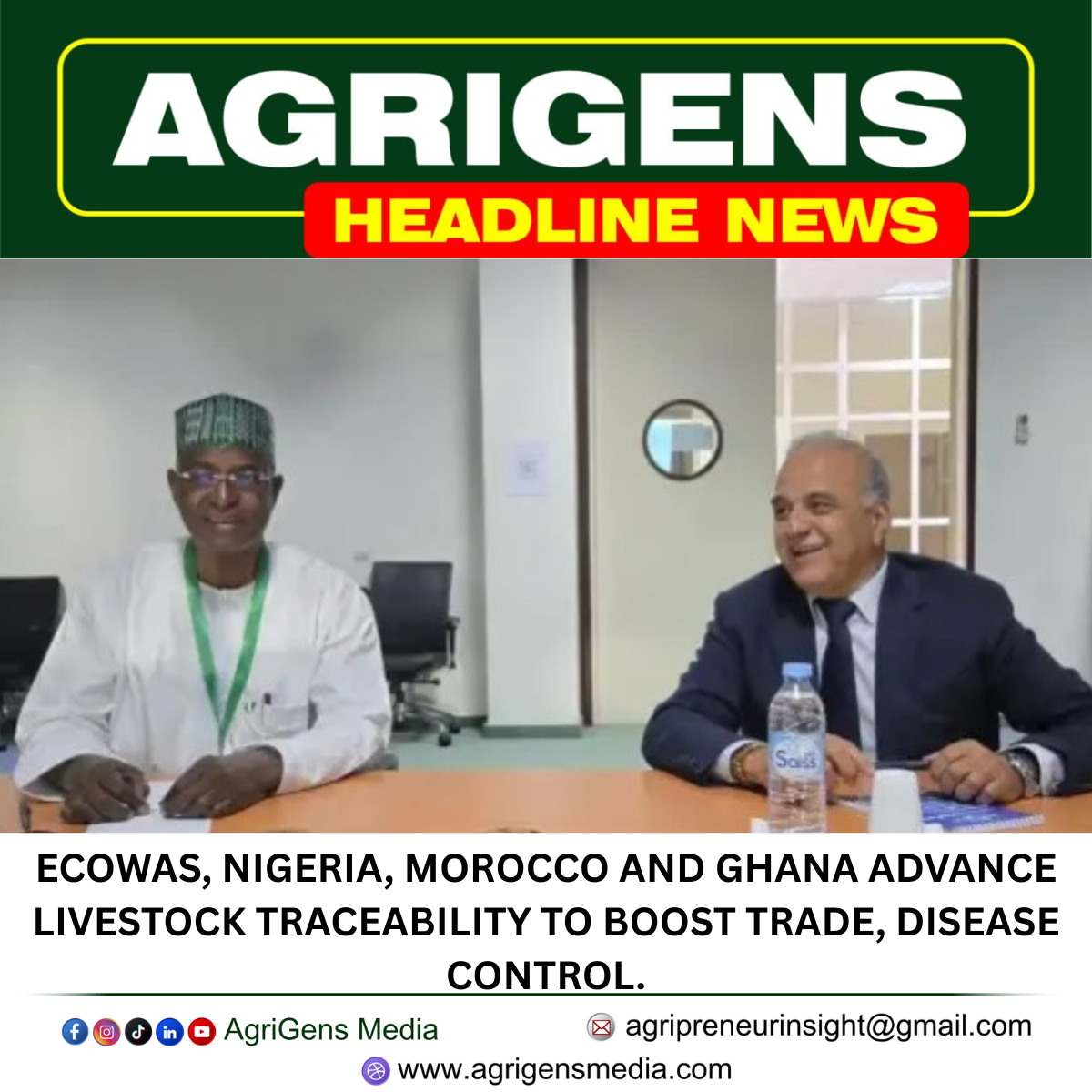
The Economic Community of West African States (ECOWAS), alongside Nigeria, Ghana and Morocco, has intensified efforts to modernise livestock management through stronger animal identification and traceability systems aimed at improving disease surveillance, strengthening veterinary services and expanding access to regional and international livestock markets.
The initiative is being advanced through ECOWAS Regional Livestock Identification and Traceability Roadmap, Nigeria’s National Livestock Information Management System (NLIMS) and Morocco’s newly introduced national animal database, according to official reports from ECOWAS, the Nigerian Government and the Moroccan Parliament.
A major milestone was recorded in Lomé, Togo, where ECOWAS concluded the 8th Meeting of the Regional Veterinary Committee, reaffirming its commitment to establishing a harmonised livestock identification and traceability framework across West Africa.
According to an ECOWAS communiqué, the three-day meeting brought together nearly 60 participants, including directors of veterinary services from member states, presidents of national veterinary associations, representatives of regional institutions, international organisations, technical and financial partners and livestock sector experts.
During the meeting, participants reviewed progress made on existing livestock traceability initiatives across the region, assessed the challenges limiting implementation and explored digital technologies capable of improving animal identification, disease surveillance and veterinary service delivery.
The committee also discussed coordinated regional strategies to strengthen livestock health management, facilitate safe cross-border movement of animals and improve compliance with international animal health and food safety standards.
Officials noted that effective livestock identification and traceability systems are essential for the early detection and control of transboundary animal diseases, reducing economic losses and safeguarding public health.
For Nigeria, the implementation of the National Livestock Information Management System (NLIMS) is expected to provide accurate, real-time livestock data to support evidence-based policymaking, resource allocation, investment planning and efficient livestock sector management.
Stakeholders emphasized that harmonising livestock traceability systems across ECOWAS member states will improve regional trade, enhance consumer confidence, facilitate livestock exports and strengthen the competitiveness of West Africa’s livestock value chain.
The participating countries reaffirmed their commitment to investing in digital livestock management systems, modern veterinary infrastructure and regional cooperation to build a more resilient, productive and globally competitive livestock sector capable of contributing to food security, economic growth and sustainable agricultural development across Africa.

