The Federal Ministry of Livestock Development has commenced the second phase of its National Capacity-Building Programme for Quality Assurance Assessors, aimed at strengthening livestock standards, improving food safety and enhancing the competitiveness of Nigeria’s livestock value chains in both domestic and international markets.
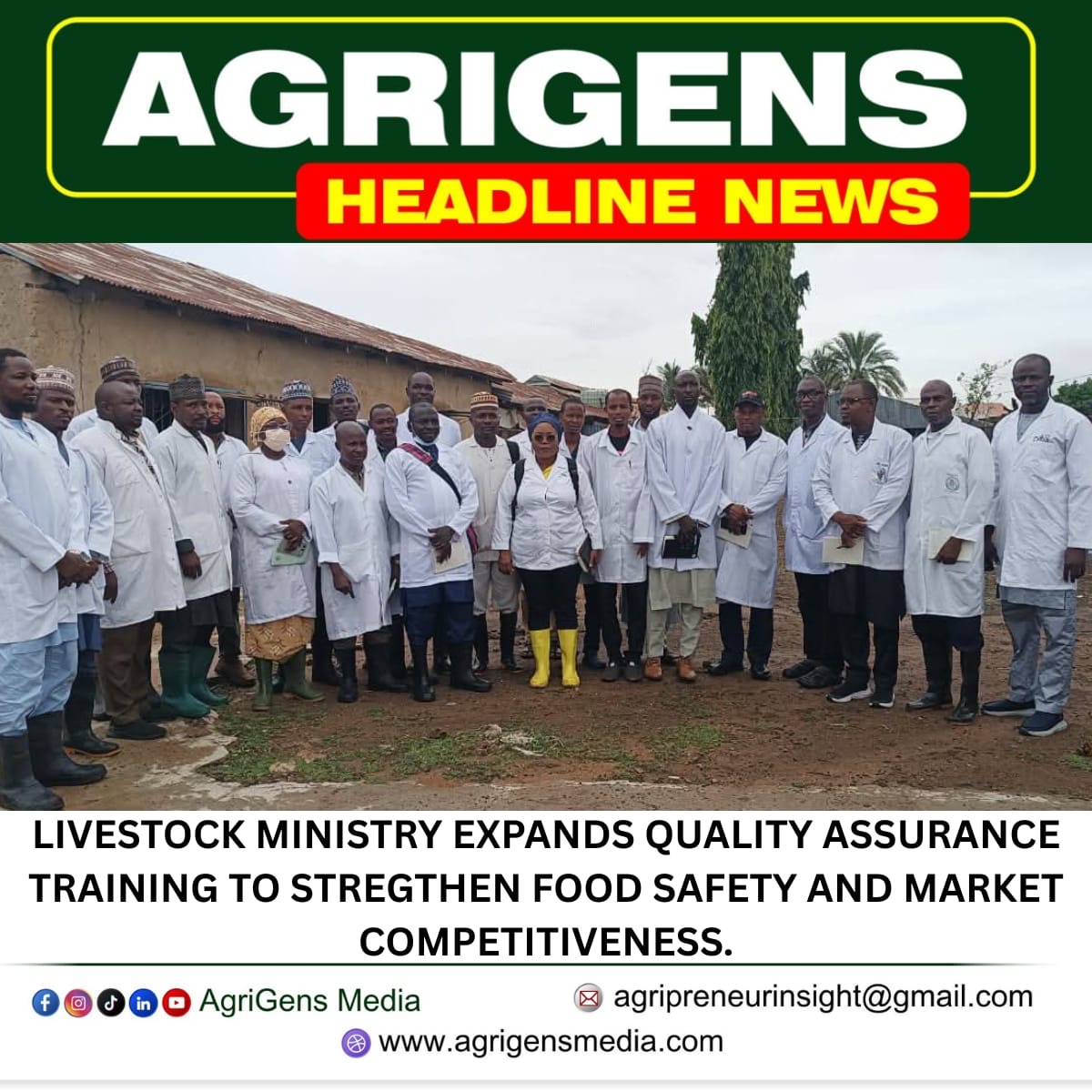
The two-day training, holding in Kaduna State, brings together participants from the North-West geopolitical zone, including Kaduna, Kano, Katsina, Kebbi, Sokoto, Jigawa and Zamfara states. It follows the successful first phase held in Yola, Adamawa State, from 6th to 8th of may 2026, for participants from the North-East.
Declaring the workshop open on Monday, June 29th, 2026, the Director of Quality Assurance and Certification, Dr. Nurallah Abubakar, described quality assurance as a critical pillar in an increasingly competitive global livestock market. He noted that the credibility of livestock products depends on the competence and integrity of assessors responsible for evaluating compliance with established standards.
Dr. Abubakar said the programme is designed to equip participants with the technical knowledge, practical skills and standardised tools needed to conduct objective, consistent and evidence-based assessments across livestock value chains.
He added that Quality Assurance Assessors play a vital role in ensuring regulatory compliance while promoting continuous improvement among producers and processors, thereby strengthening consumer confidence, expanding market access and improving productivity across the livestock sector.
The Director urged participants to uphold the highest standards of professionalism, impartiality, integrity and confidentiality, describing these values as fundamental to building a credible national quality assurance system.
Also speaking, the Director of Veterinary and Livestock Services, Kaduna State, Dr. Pakachi Zakariya, described the training as timely and necessary to address persistent challenges in quality control, food safety and regulatory compliance within the livestock industry.
He expressed concern over unhygienic processing and transportation practices affecting livestock and dairy products in parts of the country, stressing that stronger quality assurance systems are essential to safeguarding public health and boosting consumer confidence.
Dr. Zakariya further noted that ongoing reforms in the livestock sector would only achieve their objectives with a robust regulatory and quality assurance framework capable of supporting productivity, food safety and increased market access.
Representing the Kaduna State Livestock Productivity and Resilience Support (L-PRES) Project, Dr. Sani Bello highlighted the importance of quality assurance in improving productivity, reducing post-production losses and enhancing the competitiveness of Nigerian livestock products in regional and global markets.
The training features technical sessions on the Ministry’s Quality Assurance and Certification Framework, livestock value chains, animal product processing and marketing, risk-based inspection, hazard analysis, record keeping, reporting and traceability systems.
On the second day, participants undertook field visits to a poultry facility, received practical training on laboratory testing protocols and result interpretation, reviewed national, regional and international regulatory frameworks and participated in group exercises and post-training assessments.
During the field exercise, participants conducted practical quality assurance assessments, identified potential risks within the production system and provided evidence-based recommendations to farm management on measures to strengthen compliance with quality and food safety standards.