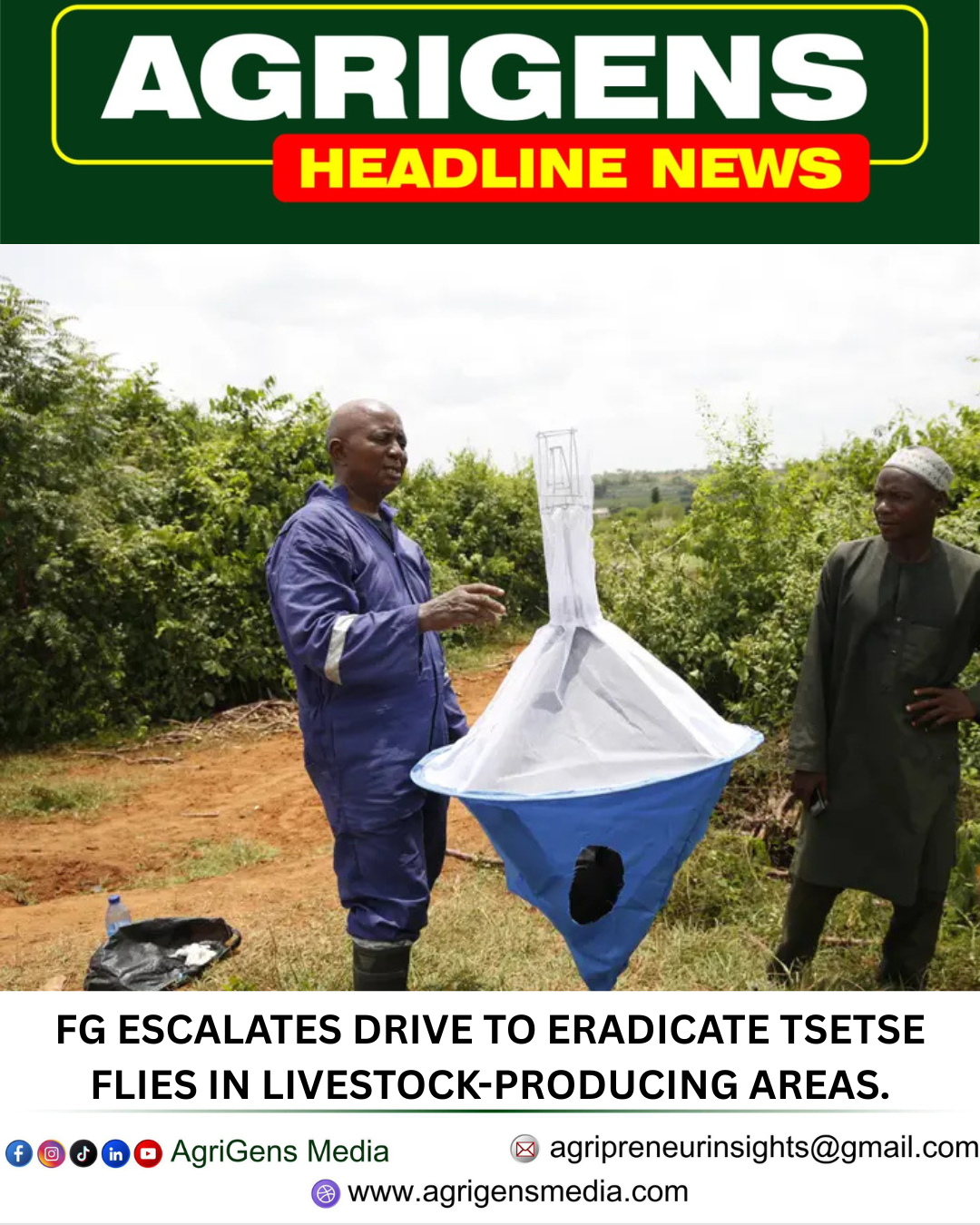
The Federal Government has intensified efforts to eradicate tsetse flies across key livestock-producing regions, in a renewed push to improve animal health, boost productivity, and strengthen Nigeria’s livestock industry.
Tsetse flies, known carriers of Trypanosomiasis, pose a major threat to cattle and other livestock, causing reduced productivity, weight loss, infertility, and in severe cases, death. The disease has long been a significant constraint to livestock development in many parts of the country.
Officials disclosed that the current intervention involves a coordinated strategy that includes vector control, surveillance, and public awareness campaigns, aimed at reducing the population of tsetse flies and limiting the spread of the disease.
The programme is being implemented in collaboration with veterinary services, research institutions, and international partners, focusing on high-risk and endemic areas where livestock production is most affected.
According to the government, key measures include the deployment of insecticide-treated targets and traps, aerial and ground spraying, and the use of environmentally safe control technologies. These methods are expected to significantly reduce the presence of the flies over time.
In addition, authorities are strengthening disease monitoring and diagnostic systems, ensuring early detection and rapid response to outbreaks of trypanosomiasis among livestock populations.
Stakeholders emphasized the importance of farmer education and community participation, noting that effective control of tsetse flies requires cooperation from livestock owners in adopting recommended practices and reporting cases promptly.
Experts highlighted that eliminating the threat of tsetse flies could unlock significant economic potential in the livestock sector, enabling farmers to increase herd sizes, improve meat and milk production, and expand into previously affected areas.
However, challenges such as funding constraints, difficult terrain, and the need for sustained intervention were identified as potential obstacles to achieving complete eradication.
The Federal Government reaffirmed its commitment to protecting livestock health and enhancing productivity through science-driven and coordinated approaches, stressing that controlling tsetse flies is essential for advancing the sector.
With the intensified eradication drive, Nigeria aims to create a healthier livestock environment, improve farmer incomes, and strengthen food security, while positioning the sector for long-term growth and competitiveness.