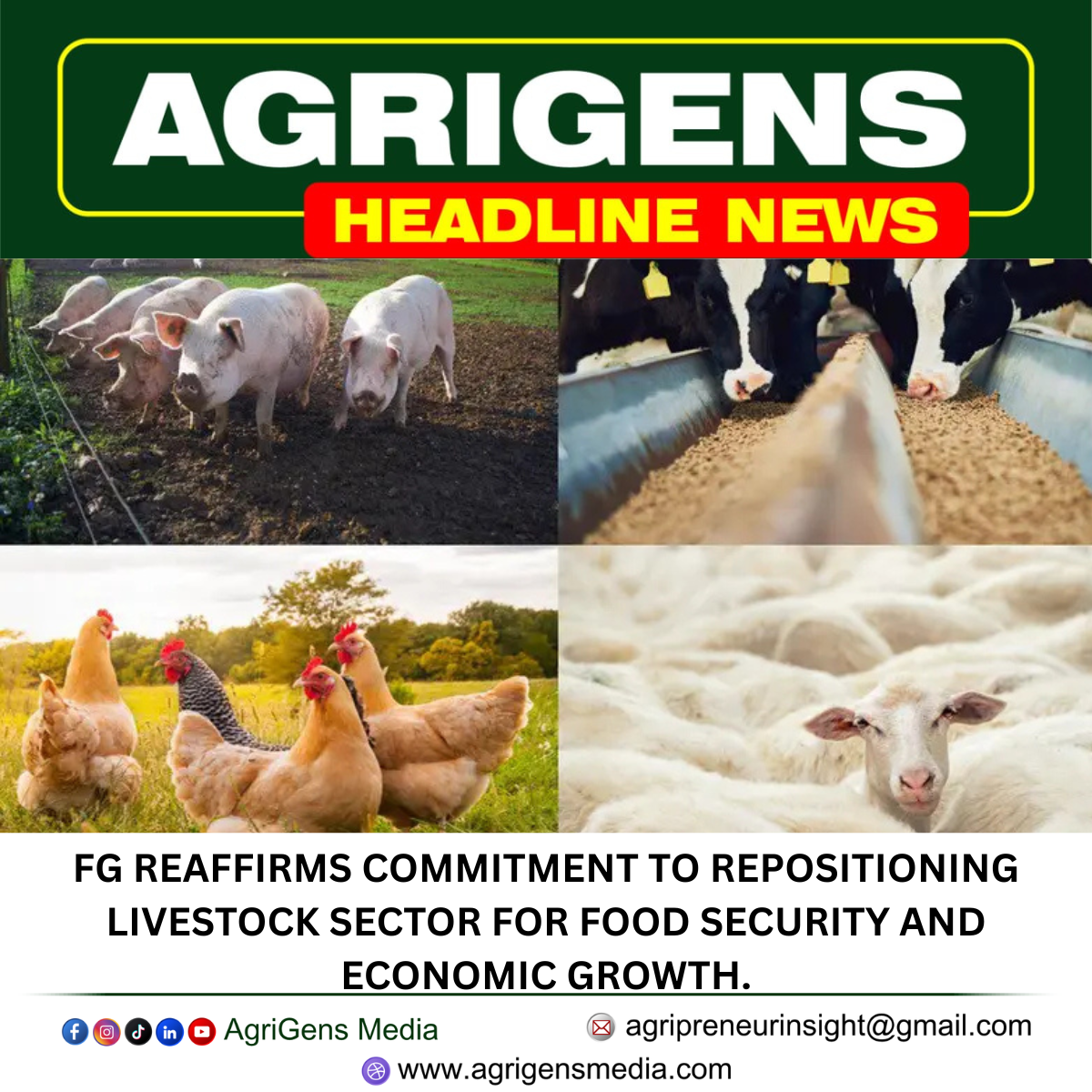
The Federal Government has reaffirmed its commitment to repositioning Nigeria’s livestock sector as a major driver of food and nutrition security, economic growth and sustainable development.
The Permanent Secretary, Federal Ministry of Livestock Development, made this known in his welcome address at the 9th All Africa Conference on Animal Agriculture, held in Abuja under the theme: “Repositioning Animal Agriculture for Africa’s Agricultural Food Security and Global Competitiveness.”
He said Africa’s growing population, changing food systems, climate challenges and expanding markets had made it necessary to rethink the role of animal agriculture in strengthening food security, improving livelihoods and enhancing the continent’s global competitiveness.
According to him, the conference provides an important platform for policymakers, researchers, livestock farmers, development partners, professional bodies and private-sector stakeholders to exchange knowledge, share experiences and explore innovative approaches to advancing animal agriculture across Africa.
The Permanent Secretary said the Federal Government’s renewed focus on livestock development reflects the sector’s importance to Nigeria’s broader agricultural transformation agenda.
He expressed appreciation to President Bola Ahmed Tinubu for his commitment to livestock development and efforts to improve food and nutrition security, create economic opportunities and position the sector as a key driver of sustainable growth.
He noted that the President’s participation in the conference, represented by the Secretary to the Government of the Federation, Senator George Akume, demonstrated the importance attached by the Federal Government to transforming animal agriculture in Nigeria and across the continent.
The Permanent Secretary also commended the Minister of Livestock Development, Alhaji Idi Mukhtar Maiha, for his leadership in strengthening the renewed attention being given to livestock as a critical component of Nigeria’s agricultural transformation.
He expressed optimism that the participation of stakeholders from across Africa and beyond would enrich deliberations and generate practical ideas capable of translating into meaningful action in the livestock sector.
He further welcomed African participants, international guests and development partners to Nigeria, noting that the conference would provide opportunities to strengthen partnerships and advance animal agriculture across the continent.
The conference brought together representatives of the African Union–Inter-African Bureau for Animal Resources (AU-IBAR), International Livestock Research Institute (ILRI), Food and Agriculture Organization of the United Nations (FAO), United States Department of Agriculture (USDA), Heifer International, professional associations, academia, research institutions, livestock farmers and other key stakeholders.