The Federal Government has begun discussions with the International Livestock Research Institute (ILRI) on the implementation of a continental livestock development programme expected to create 230,000 jobs in Nigeria with at least 70 per cent of the opportunities earmarked for young women.
The jobs will be created under the Rural Employment through Animal Feed Production (REAP) initiative, a US$250 million programme supported by the Mastercard Foundation and spanning seven African countries. The initiative aims to generate one million jobs across the continent by expanding animal feed production, strengthening livestock value chains and promoting enterprise development.
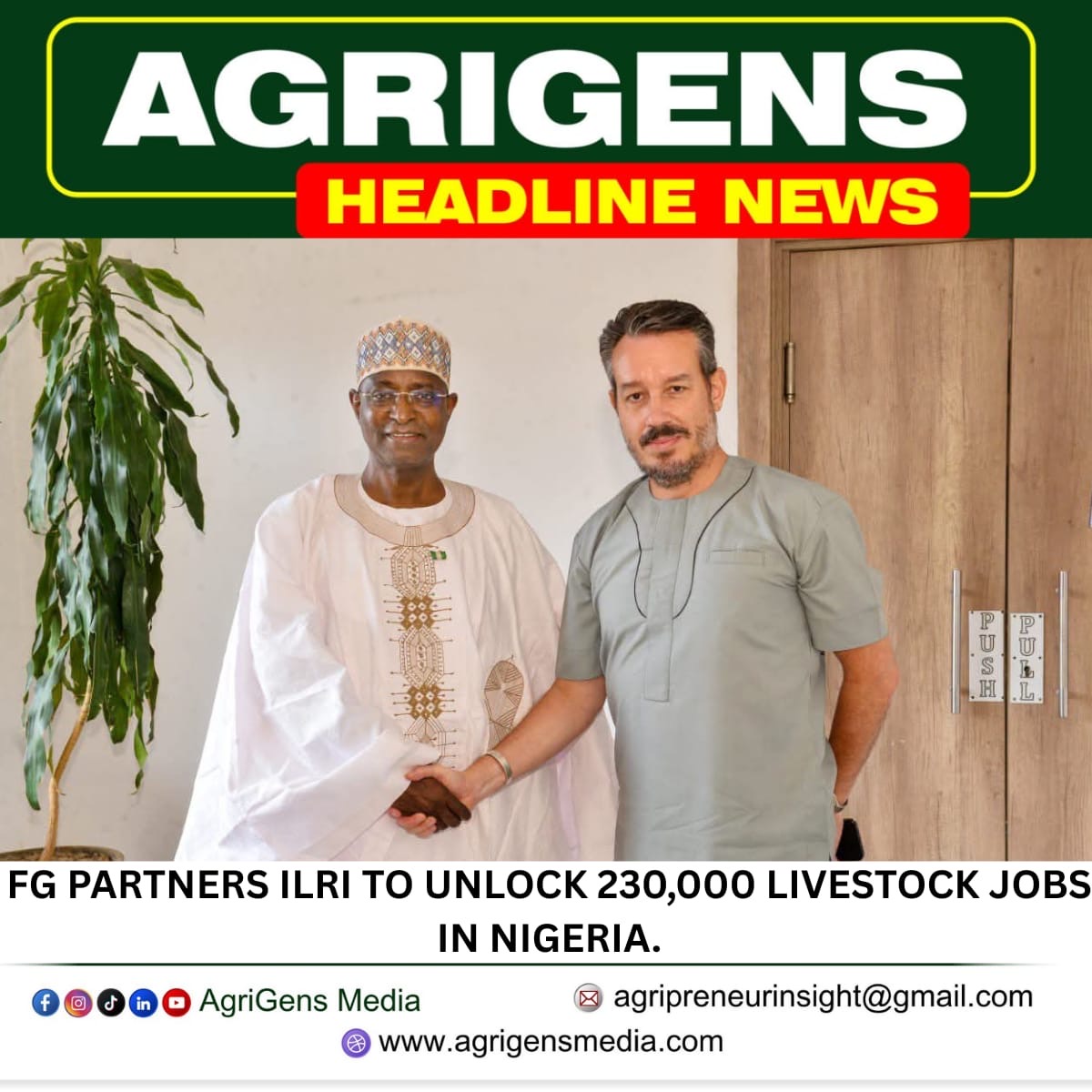
Speaking during a meeting with Dr. Sibiry Traoré, Senior Scientist in Digital Agriculture at ILRI, on Tuesday, July 21, 2026, the Minister of Livestock Development, Idi Mukhtar Maiha, reaffirmed the Federal Government’s commitment to partnering with ILRI and other implementing organisations to maximise the employment, investment and livestock development opportunities offered by the programme.
Maiha described the REAP initiative and the proposed African Livestock Resilience Programme (ALRP), which is being developed with financing support from the Islamic Development Bank (IsDB), as key interventions that align with President Bola Ahmed Tinubu’s livestock transformation agenda.
According to the Minister, the programmes will drive job creation, strengthen dairy development, improve animal nutrition and build more resilient livestock production systems across the country.
“Everything is about feed and fodder,” Maiha said. “Nigeria has the land, water resources and a youthful population, including women, who can be productively engaged in commercial, medium- and small-scale fodder production. By investing deliberately in fodder cultivation, preservation, feed compounding and value addition, we can strengthen the livestock sector, improve productivity and create sustainable livelihoods.”
He explained that improved feed availability would complement ongoing efforts to eradicate Peste des Petits Ruminants (PPR), increase sheep and goat productivity, boost dairy production, reduce seasonal livestock migration and enhance national food security.
Maiha disclosed that the Ministry would collaborate with state governments to utilise irrigable land around existing dams for year-round pasture cultivation while promoting the transportation of animal feed to livestock-producing areas instead of moving animals across the country.
“We must begin to move feed instead of moving animals,” he said. “Transporting baled crop residues and processed feed from surplus-producing areas to livestock-producing zones is a more sustainable and peaceful approach than seasonal migration in search of pasture. Feed and fodder remain central to improving productivity, reducing conflicts and increasing dairy output.”
The Minister assured the delegation that Nigeria would immediately begin the process of joining the initiative. He also directed relevant technical departments of the Ministry to engage with ILRI, the International Institute of Tropical Agriculture (IITA) and other implementing partners to develop a roadmap for the country’s participation in both programmes.
Earlier, Dr. Traoré explained that REAP is a development-driven initiative rather than a research project, with about 70 per cent of its funding allocated to public and private sector partners to stimulate enterprise growth, improve access to finance and strengthen animal feed businesses.
He noted that the programme would support investments in alternative feed resources such as Black Soldier Fly technology, high-quality cassava products, sweet potato-based feed, total mixed rations and improved feed processing enterprises, creating employment opportunities across production, processing, logistics and agricultural services.
Dr. Traoré also briefed the Minister on the proposed US$600 million African Livestock Resilience Programme (ALRP), which is expected to strengthen livestock production systems, digital agriculture, climate resilience, agricultural financing and regional collaboration across participating African countries.
He added that ILRI is ready to support Nigeria in preparing the necessary documentation and stakeholder engagements required for the country’s formal participation.
The meeting also featured discussions on digital agriculture, agricultural extension services, innovative livestock financing, climate-smart livestock production and stronger public-private partnerships aimed at building a more resilient, productive and competitive livestock sector in Nigeria.