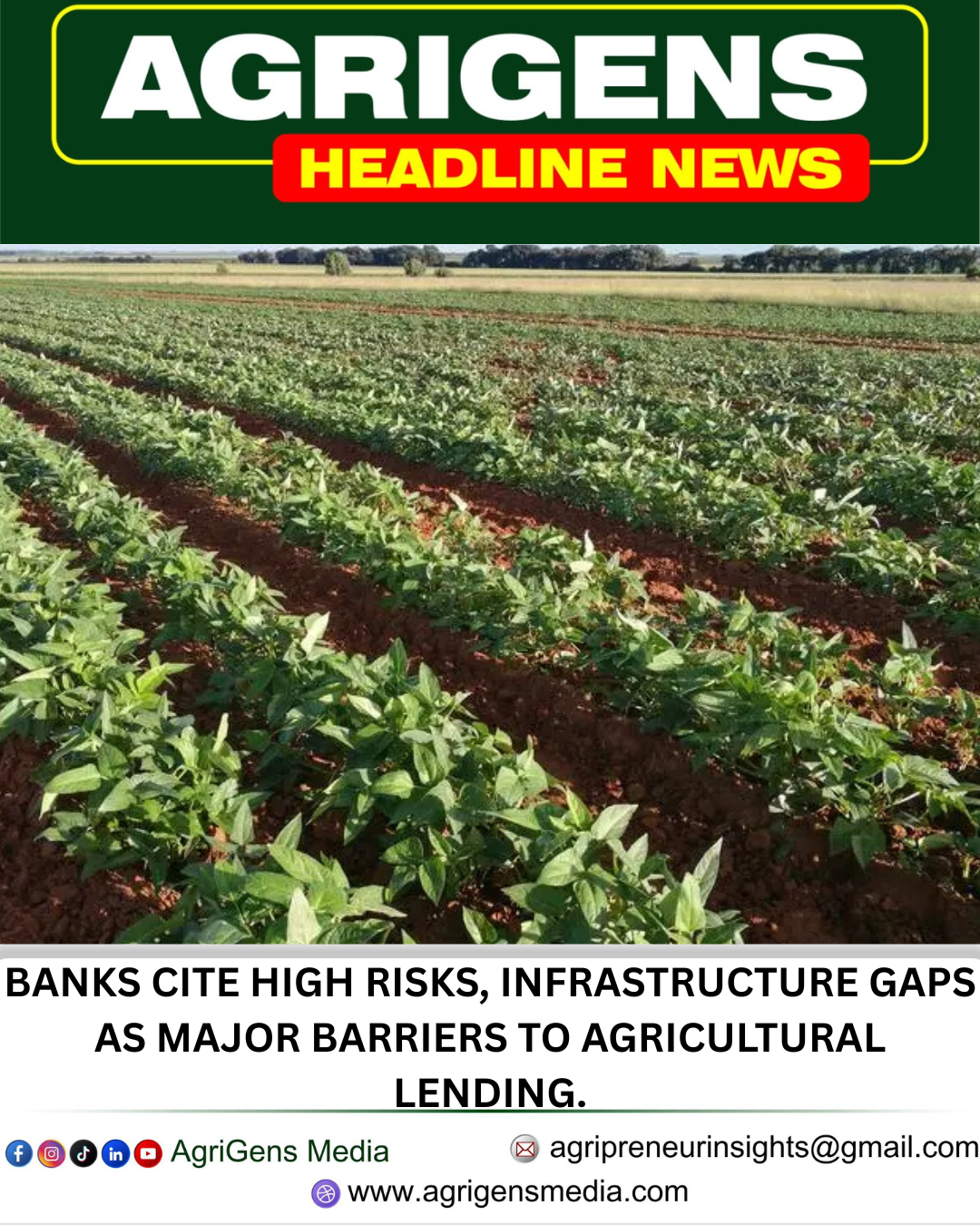
Commercial banks have identified high operational risks, inadequate infrastructure, market volatility and low insurance coverage as major factors limiting credit flow to Nigeria’s agricultural sector despite growing calls for increased financing support for farmers.
The President of the Association of Corporate Affairs Managers of Banks Rasheed Bolarinwa, said financial institutions remain cautious about expanding agricultural lending due to the unique vulnerabilities associated with farming activities across the country.
Speaking on the persistent financing gap in the sector, Bolarinwa acknowledged the importance of agriculture to food security, employment generation and economic growth but described the industry as one of the highest-risk sectors for lenders.
According to him, agricultural production is exposed to numerous factors beyond the control of both farmers and financial institutions including flooding, drought, pest and disease outbreaks, commodity price fluctuations, insecurity in farming communities, and inadequate storage and transportation infrastructure.
“Agriculture is exposed to several risks that are often outside the borrower’s control. These include flooding, drought, pest and disease outbreaks commodity price volatility insecurity and weak infrastructure affecting storage and transportation,” he said.
Bolarinwa noted that intervention programmes such as the Agricultural Credit Guarantee Scheme Fund have helped reduce lending risks but do not completely shield banks from financial losses.
He explained that lenders still absorb part of the losses under the guarantee scheme, while loan recovery processes can sometimes be prolonged by administrative and operational challenges.
The ACAMB president further stated that agricultural financing often attracts higher operational and monitoring costs, particularly when serving dispersed smallholder farmers located in remote rural communities.
On the issue of collateral requirements, he maintained that banks have a responsibility to safeguard depositor’s funds through prudent lending practices and effective risk management frameworks.
According to him, conventional collateral remains an important requirement where farmers lack reliable financial records, verifiable cash flows or alternative credit assessment mechanisms.
“Collateral helps ensure borrowers remain committed to repayment obligations while enabling banks to manage risks responsibly,” he added.
Despite these challenges, Bolarinwa disclosed that some financial institutions are gradually embracing alternative financing approaches aimed at expanding access to agricultural credit.
He identified value chain financing, warehouse receipt financing, aggregation-based lending and cash flow-driven financing models as emerging options being explored to support farmers without traditional collateral.
However, he noted that these financing models remain at a developmental stage and have not yet fully replaced conventional lending practices within the banking industry.
The banking executive also identified market instability as a major deterrent to agricultural lending, citing commodity price fluctuations, foreign exchange pressures and inflation as factors that affect farmer’s repayment capacity and complicate cash-flow projections.
According to him, the relatively low share of agriculture in total bank lending reflects deeper structural issues within the sector, including fragmented value chains, poor data availability, low agricultural insurance penetration and inadequate rural infrastructure.
Bolarinwa stated that banks are increasingly partnering with development finance institutions while deploying digital lending platforms, cluster financing models and risk-sharing arrangements to improve access to finance for farmers.
He also highlighted ongoing investments in farmer capacity building, financial literacy, agricultural loan monitoring systems and technology-driven collection mechanisms.
The ACAMB president called for stronger government support and policy reforms to encourage greater lending to the agricultural sector.
According to him, expanded agricultural insurance coverage, improved infrastructure, mechanisation support, increased energy access and stronger credit guarantee systems would significantly reduce lending risks and improve confidence among financial institutions.
Meanwhile, the Governor of the Central Bank of Nigeria, Olayemi Cardoso, recently stressed the need for agriculture to occupy its rightful place within Nigeria’s financial system and broader development agenda.
Speaking during the inauguration of the newly reconstituted board of the Agricultural Credit Guarantee Scheme Fund in Abuja, Cardoso expressed concern that agriculture accounts for less than five per cent of total bank lending despite contributing more than one-fifth of Nigeria’s Gross Domestic Product and employing a significant portion of the workforce.
He explained that the ACGSF was established to encourage financial institutions to extend credit facilities to farmers, including those traditionally regarded as financially excluded or underserved.
Cardoso further noted that amendments made to the scheme in 2019 increased its share capital from ₦3 billion to ₦50 billion in an effort to strengthen agricultural financing and improve access to credit.
The CBN governor also highlighted the challenges facing smallholder farmers, who constitute about 80 per cent of Nigeria’s farming population and account for nearly 90 per cent of national food production yet continue to face barriers such as inadequate collateral and limited credit histories.
Reacting to the situation, the President of the All Farmers Association of Nigeria, Mohammed Magaji, expressed concern over poor access to agricultural financing, accusing commercial banks of remaining reluctant to lend to farmers despite existing government-backed guarantee mechanisms.
Stakeholders noted that addressing the structural constraints affecting agricultural finance will be critical to improving food production, enhancing rural livelihoods, strengthening value chains, and achieving Nigeria’s long-term food security and economic development objectives.