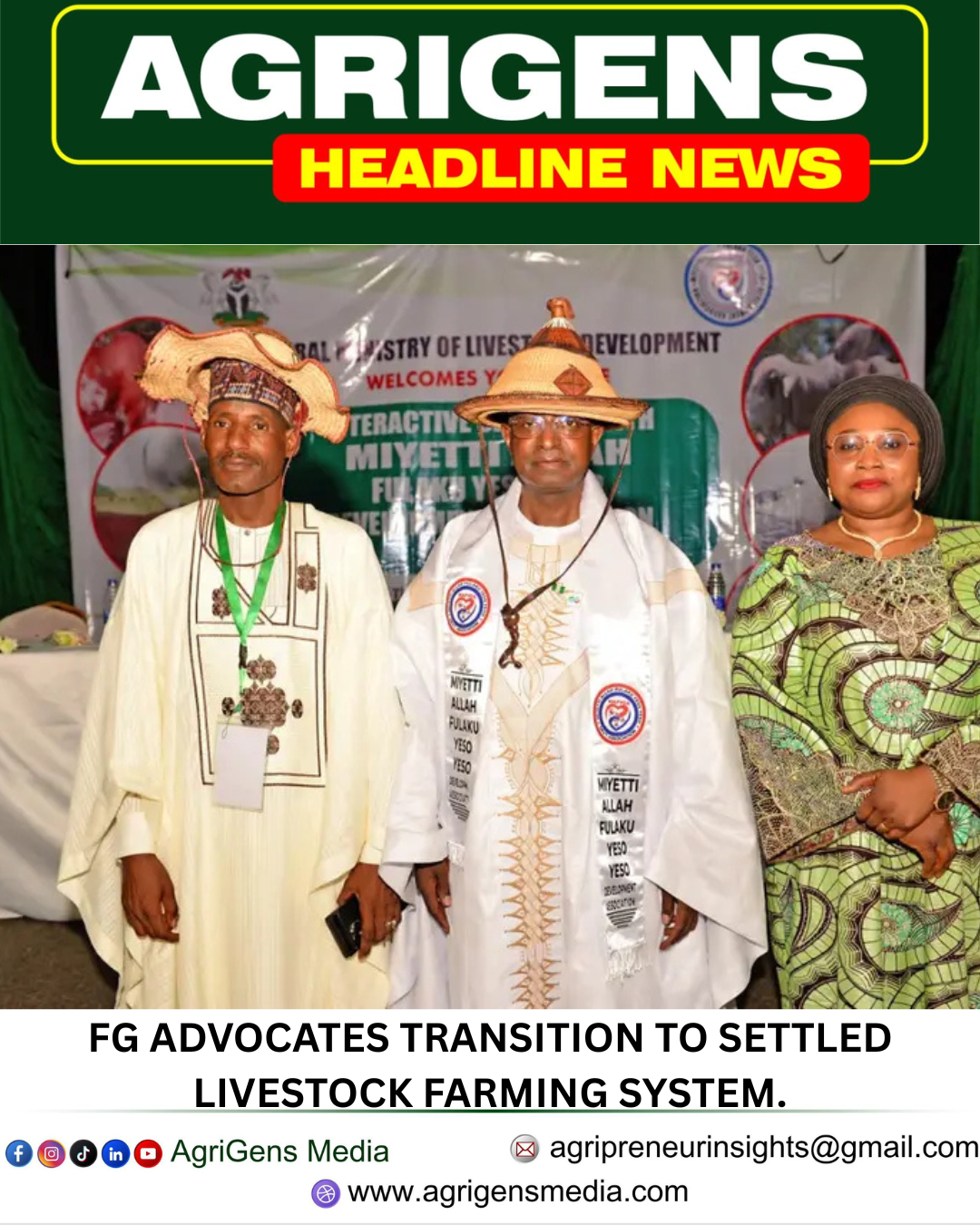
The Federal Government has renewed calls for the transition from open grazing practices to settled livestock farming systems as part of efforts to modernise the livestock sector, improve productivity and strengthen national food security.
Government officials stated that adopting settled livestock production models such as ranching and integrated animal husbandry systems would help address recurring farmer-herder conflicts, enhance animal health management and promote sustainable agricultural development.
According to the government modern livestock systems are expected to improve feed management, breeding practices, disease control and overall efficiency within the livestock value chain while reducing pressure on grazing lands and natural resources.
Stakeholders within the agricultural sector noted that settled livestock farming could also support increased meat and dairy production, attract private sector investments and create employment opportunities across related agribusiness industries.
The government further emphasised the importance of developing supporting infrastructure including grazing reserves, water facilities, veterinary services, feed production systems and processing centres to ensure the successful implementation of the transition.
Experts explained that climate change, population growth, land-use pressures and rising insecurity have made traditional open grazing increasingly unsustainable thereby necessitating more structured and technology-driven livestock management systems.
Stakeholders also called for stronger collaboration among federal and state governments, livestock associations, private investors and development partners to provide adequate funding, training and policy support for livestock reform initiatives.
The Federal Government reaffirmed its commitment to policies and programmes capable of transforming the livestock sector into a more productive, secure and economically sustainable component of Nigeria’s agricultural economy.