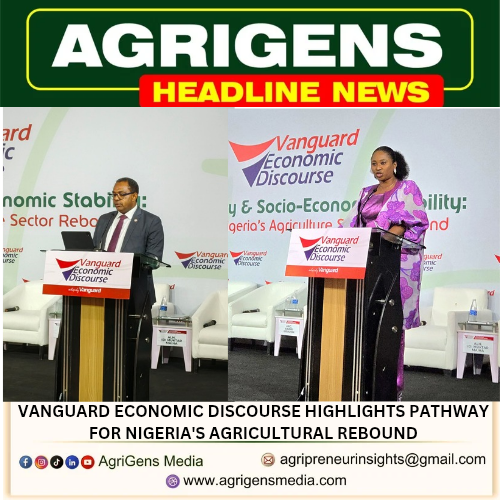
The Federal Government and state governments have intensified collaboration to accelerate Nigeria’s food security agenda, in a coordinated effort to boost agricultural production, stabilise food prices, and strengthen the nation’s food systems.

Officials disclosed that the renewed partnership focuses on aligning policies, pooling resources, and improving implementation of agricultural programmes across all levels of government. The move is aimed at addressing persistent challenges affecting food availability and affordability nationwide.
According to stakeholders, the collaboration will prioritise key areas such as increased crop production, livestock development, irrigation expansion, and agro-processing, ensuring a more integrated approach to agricultural growth.
The governments also plan to strengthen input distribution systems, including seeds, fertilisers, and agrochemicals, to ensure that farmers receive essential inputs on time and at affordable rates. This is expected to improve productivity, particularly among smallholder farmers.
In addition, the joint effort will focus on improving rural infrastructure, such as roads, storage facilities, and market access, to reduce post-harvest losses and enhance the efficiency of the agricultural value chain.
Stakeholders emphasized the importance of data-driven planning and monitoring, noting that accurate information is critical for tracking progress and ensuring accountability in programme implementation.
The collaboration also seeks to enhance security in farming communities, recognizing that insecurity has been a major constraint to agricultural activities in several parts of the country. Measures are being considered to protect farmers and ensure safe access to farmlands.
Experts highlighted that stronger coordination between federal and state governments can help eliminate duplication of efforts and ensure that interventions are targeted, efficient, and impactful.
There are also plans to promote private sector participation and investment, leveraging partnerships to scale up production, processing, and distribution activities across the agricultural sector.
However, stakeholders noted that success will depend on policy consistency, adequate funding, and effective governance structures, which are essential for sustaining long-term progress.
The Federal Government reaffirmed its commitment to working closely with states to achieve self-sufficiency in food production and reduce dependence on imports, while improving the livelihoods of farmers.
With this strengthened collaboration, Nigeria is taking a significant step toward building a resilient, inclusive, and sustainable food system capable of meeting the needs of its growing population.